On August 11, 2025, the Lok Sabha approved the Income Tax (No. 2) Bill, marking the biggest reform of India’s tax laws in decades. The bill will replace the Income Tax Act of 1961, which has been in force for 63 years.
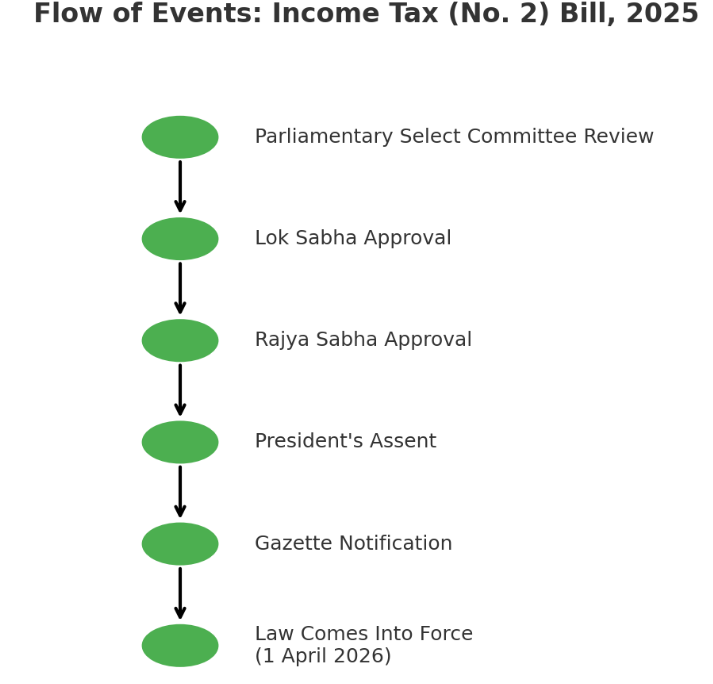
Finance Minister Nirmala Sitharaman introduced the bill. The new income tax bill is drafted with the aim of making the tax system simpler, reducing legal disputes, and adapting rules to today’s digital economy. The bill, after passing the Lok Sabha, will go to the Rajya Sabha and then to the President of India for assent. The new law will come into effect from April 1, 2026.
The original Income Tax Bill, 2025, was tabled on February 13, 2025, but withdrawn on August 8, 2025, to incorporate recommendations from a Parliamentary Select Committee chaired by BJP MP Baijayant Panda.
The bill was passed in just three minutes without debate, as opposition MPs were protesting over unrelated electoral roll issues in Bihar.

Key Provisional Changes
The revised bill incorporates most of the 285 recommendations from the Select Committee’s 4,575-page report, including 32 major changes. Here are the highlights:
Simpler Language—The bill is drafted with simpler English as compared to the previous Income Tax Act, 161. The number of legal sections is reduced from 819 to 536. The bill follows the “SIMPLE” principles: Streamlined, Integrated, Minimised disputes, Practical, Learn and adapt, and Efficient reforms.
Benefits for Individuals—Taxpayers, being individuals, can now claim tax refunds (TDS) even if they file their income tax returns (ITR) late (after 31st July).
Taxpayers with no tax to pay, including NRIs, can get a “nil” tax deduction certificate beforehand.
Penalties can be waived for minor mistakes, and no penalty will be charged for late TDS filings.
House property owners can get a 30% standard deduction on rental income (after municipal taxes) and extended deductions for pre-construction interest on let-out properties.
Benefits for Businesses—Companies can claim deductions on dividends received from other companies. This was introduced to avoid double taxation.
Rules for Minimum Alternate Tax (MAT) and Alternate Minimum Tax (AMT) have been separated, with some exemptions for Limited Liability Partnerships (LLPs).
Professionals with receipts above ₹50 crore must use approved electronic payment methods.
Benefits for Charitable Trusts & Nonprofit Organisations— Tax rules for anonymous donations remain aligned with existing provisions, with exemptions for mixed-object non-profits.
The 15% minimum investment rule for surplus funds has been removed.
Capital gains used to buy new assets will count as part of income.
Digital Monitoring—The definition of “virtual digital assets” was included with inclusively adding cryptocurrencies, NFTs, and similar digital items, marking them as covered under the bill.
Undeclared digital assets will be treated as hidden income.
Tax officers can access digital accounts, emails, and cloud storage during searches, raising some privacy concerns.
Tax Administration Changes—In the new bill, the TDS correction window has been cut from six years to two, making ease in grievances.
The faceless tax assessment scheme (an initiative to conduct income tax assessments digitally) will continue further in the bill, ensuring fairness and efficiency.
Existing tax slabs, capital gains rates, and income categories remain unchanged.
After more than six decades, India is finally trading in its outdated Income Tax Act, 1961, for a more updated version. Bill took three minutes for approval—faster than most people’s TDS filing.
By reducing complexity and embracing digital realities. If implemented effectively, it could set the stage for smoother compliance and stronger trust between citizens and the tax department.
Disclaimer:
This article is for informational purposes only. It is not legal or financial advice. Readers should refer to official government notifications or consult a qualified professional for guidance specific to their situation.