Negative Working Capital?
When liabilities exceed assets, often implying potential liquidity risk, then it is termed as Negative Working Capital. Traditionally, it was considered a precursor to bankruptcy. However, for businesses able to manipulate the timing of receipts and payments, negative working capital can become a source of free, almost interest-free funding.
Modern Business Models turn a “Red Flag” into a “Cash Cow”
At first glance, it looks like a sign of stress, current liabilities exceeding current assets, the business seemingly unable to meet short-term obligations. However, for a select group of innovative business models across retail, marketplaces, and SaaS, negative working capital is less a warning and more a competitive weapon, helping companies scale with astonishing speed and efficiency by essentially “printing cash.”
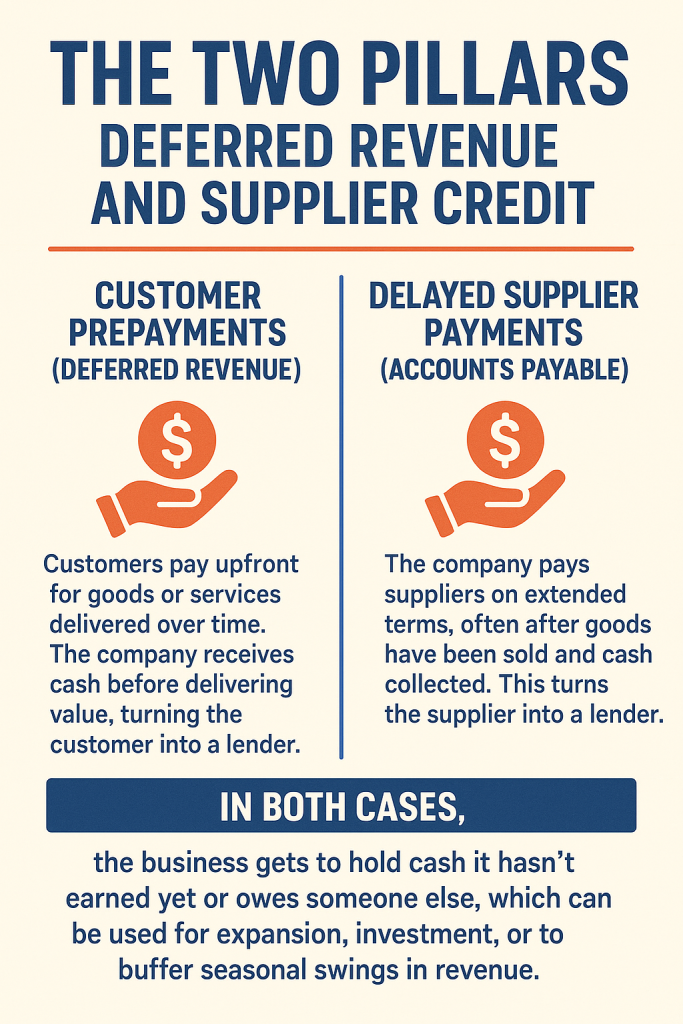
The Two Pillars: Deferred Revenue and Supplier Credit
Amazon is the best-known, largest-scale example of negative working capital operationalised. Since its inception, Amazon has consistently reported negative net working capital. How did this happen, and how did it change the company’s fate?

How Amazon’s “Float” Funded Growth
- Fast Inventory Turns, Slow Payments: Amazon cycles through much of its inventory within 30 days, but pays its suppliers after 60 or even 90 days. During that window, it effectively uses the supplier’s money to fund operations.
- Surplus Funding: In its early years, including the period before its IPO, Amazon raised $10.2 million in funding, but needed $12.5 million to operate. Rather than turning to expensive debt or selling more equity, Amazon used supplier float. By the quarter before its IPO, Amazon had $7.2 million in cash, largely credited to having “borrowed” nearly $10 million from suppliers due to negative working capital.
As long as Amazon kept growing, this working-capital machine fueled its cash generation and ability to invest without external financing. However, when the growth slows, negative working capital can quickly flip, requiring rapid capital injections just to pay day-to-day bills.
Nestlé India: Negative Working Capital in the Fast-Moving Consumer Goods (FMCG) Sector
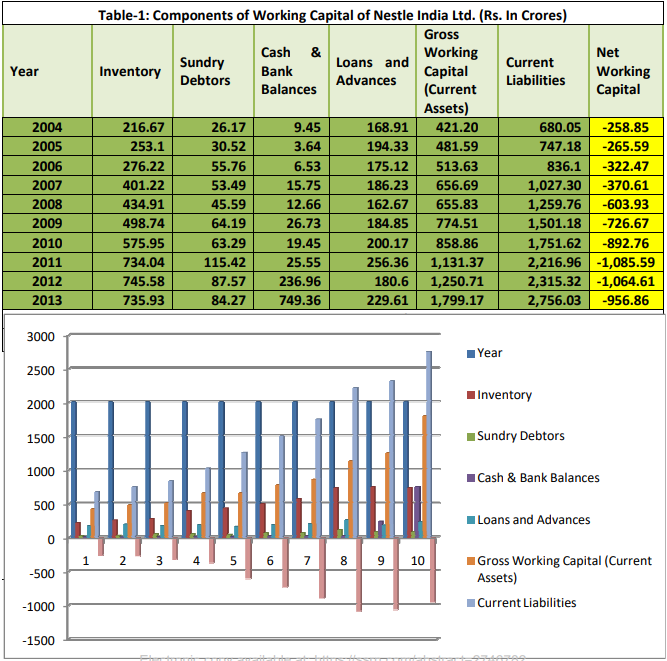
Nestlé India Limited operates with persistent negative working capital, challenging the traditional belief that this signals “financial stress.” In reality, the business is thriving and highly profitable by leveraging supplier and customer relationships for robust cash conversion.
Nestlé’s Model in Practice
- Consumers Pay Early: Nestlé sells its goods to wholesalers and distributors who pay on time, often before the product has even reached end customers.
- Supplier Payment Terms: Nestlé negotiates extended payment terms with suppliers, sometimes days or weeks after the goods have already been sold.
- Results for Investors: This “chemical reaction” allows Nestlé India to maximise profits, deliver high dividends, and reward shareholders with substantial capital appreciation.
SaaS: “Software as a Service“, When Customers Lend You Cash Through Subscriptions
Adobe, a leading software company famous for products like Photoshop and Acrobat, shifted from traditional software sales to a subscription-based SaaS model with its Adobe Creative Cloud. This transition illustrates how SaaS businesses use negative working capital effectively.
- Adobe’s annual reports show billions in deferred revenue, sometimes more than $6 billion, representing prepaid services yet to be delivered.
- The upfront cash inflow significantly improves Adobe’s cash conversion cycle, often resulting in negative working capital.
- This working capital dynamic supports Adobe’s high valuation and ability to continually innovate and expand.
Key Metrics of How inventory is converted to cash fast
Inventory Turnover Ratio: Measures how many times a store sells and replaces its entire inventory annually.

A higher Inventory turnover ratio generally indicates strong sales and efficient inventory management. This means the company is not holding onto a lot of unproductive inventory. A very low ratio could suggest weak sales, overstocking, or obsolete inventory. Conversely, an extremely high ratio could indicate that a company is not keeping enough inventory on hand and may be losing sales due to stockouts.
Cash Conversion Cycle (CCC): The total time (in days) it takes for a company to convert its investments in inventory and other resources into cash flows from sales.
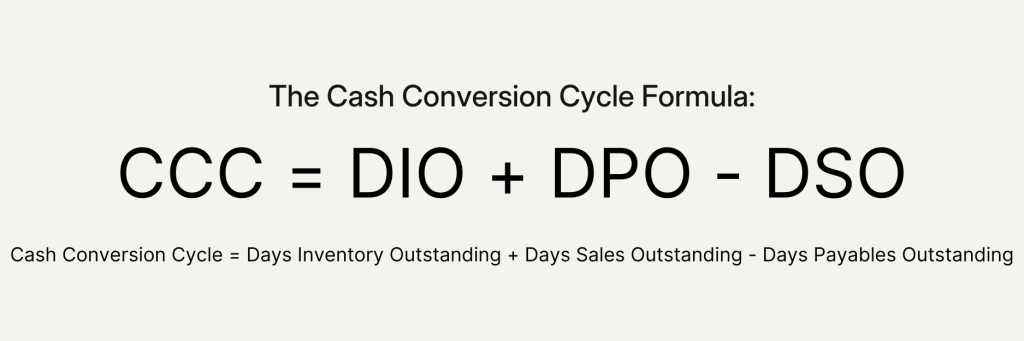
- DIO (Days Inventory Outstanding): This is the focus of your question and the first step in the cycle.
- DSO (Days Sales Outstanding): The average number of days it takes for a company to collect cash from its customers after a sale has been made. A lower DSO is better.
- DPO (Days Payable Outstanding): The average number of days it takes for a company to pay its suppliers. A higher DPO is generally better from a cash management perspective, as it means the company is holding onto its cash for a longer period.
All these metrics are crucial for investors, analysts, and managers to understand a company’s operational efficiency and how effectively it is managing its working capital to generate cash.
Conclusion
Negative working capital, far from being a universal hazard, is a core pillar of 21st-century business strategy for retailers, SaaS companies, and marketplaces. From Amazon’s meteoric rise to Nestlé’s continuing efficiency and the embedded value in the SaaS model, the ability to “print cash” via working capital mastery separates the disruptors from the disrupted. But for manufacturers, capital-intensive businesses, or those with slow-moving inventory, sustained negative working capital can spell disaster in a downturn.
Therefore, the right business, with the right model, negative working capital is not just survivable; it is a superpower.