If I ask you what your favourite animation is, I can highly guess it would be something out of Disney, be it the princess movies or the recent ones- our childhood has been painted with the magical world of Disney. On the other hand, with the social media boom and globalisation of media, the name of Hayao Miyazaki is never unheard of, the father of Ghibli movies, which has somehow made us escape and find beauty in our mundane lives, as portrayed by the artistic nature of Ghibli.
If we are to look at both sides, they would initially seem like parallels in accordance with culture, audiences, ideas, and stories representing the best of both Eastern and Western Worlds. But with a closer inspection, we can understand and identify the uncanny similarities that both worlds carry with each other.
Through this article, we will dive into a journey to understand the importance of nature and environment in the animated worlds of Disney and Ghibli. You might ask me why I chose nature as the primary aspect. My answer would be that nature symbolises life and death; it is what shapes us, makes us, and influences us in every step of our lives, preserving the sacred balance between destruction and creation. Yet, as we continue to prosper towards development, we continue to destroy and exploit the nature that inhabits us. Therefore, this article will also reflect as a mirror to reflect what we should think of nature and its qualities.
My Neighbour Totoro (1988):
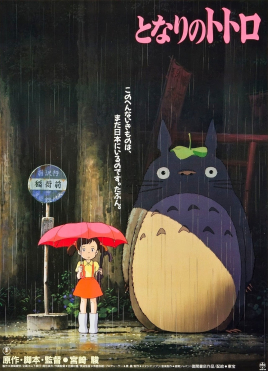
This film is a masterpiece where ordinary life is romanticised and Nature provides sanctuary, in one word It heals, one of the best creation of Ghibli studios the story focuses on the lives of two sisters Satsuki and Mei aged 10 and 4 respectively and their father, Together they move into an old house in Japanese countryside to be closer with their sick mother who is under treatment. Inspired by the practice of Shinrinyoku or forest bathing, this film treats nature as an embodiment of restoration and recuperation for all the people surrounding it, Here nature acts as the guide, and nurturer of humanity as symbolises through the relationship between sisters and the forest God Totoro, similarly there are instances where the characters also pay reverence to the nature as depicted, the rural setting is filled with fox shrines and tori gates, the camphor tree is wrapped with rice paper rope called the shimenawa reflecting the sacred qualities.
In fact, in Japan, believing nature to be sacred is quite common, which draws inspiration from the idea of ‘Kodama’- forest spirits that dwell in mature trees, just like the creatures and the God that we see in the movie. Another aspect is showcasing Nature as a protector, like how Totoro helps find Mei when she gets lost, or providing comfort to the sisters from the anxiety and worries about their ill mother. To sum up, as Miyazaki highlights in an interview, in a world where the virtual world and consumerism are booming, nature and environment should become the primary motifs through which children can grow up much better and healthier.
Princess Mononoke (1997):
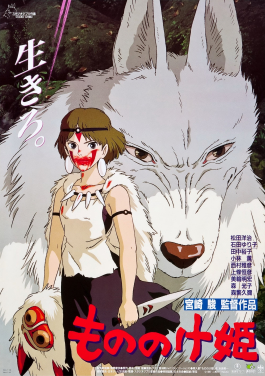
This film highlights the complexity between man and nature, destruction and progress. At the central plot lies the story of Prince Ashitaka, afflicted with a curse, who journeys towards the Heart of Nature to find a cure while overcoming several obstacles. Firstly, the film being pro-nature at its premises shows the damage and exploitation eschewed by the advancement of technology and industries as depicted through the Town.
Similarly, it also portrays the absolute violence that Nature is capable of bringing towards anyone who attempts to sabotage it, as symbolised through the rampage of the forest spirit. The film also introduces other characters like San—wolf girl and Lady Eboshi—the leader of the iron town, both of them representing the opposite worlds perpetuating violence on each other to protect their own homes, only the little spirits called ‘Kodama’ possible representation of children and innocence are the ones that remain as passive observers of acts of war and destruction, Lastly it’s again emphasized that nature can heal which it breaks as forest spirts restores everything, and the last question that remains is why can’t humans be in harmony with nature probably the answer which we will have to keep on looking for.
Moana (2016):
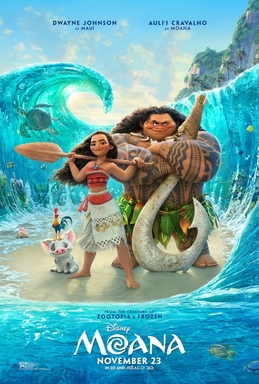
Disney is known for its magical creations, one of which is Moana. The story revolves around Moana and her journey to restore Te Fiti’s heart, which has been stolen to protect and save her community and the nature surrounding them. This movie is a true representation of incorporating culture through nature—the story of moana represents the story of Polynesian culture, their dwelling place Motunnui is the island which provides them nourishment and in turn nurtures their life, all inspired from the idea of ‘Aloha Aina’ meaning caring for the land, for the Hawaiian people Land is their religion, an animated being capable of living and dying.
In the story, Nature is also portrayed as being both the destroyer and the protector, it’s the sea which guides moana to solve the eminent crisis whereas Te Ka the alternate persona of Te Fiti which attempts destroy everything in rage, unlike Princess Mononoke where the forest spirit had to die to create, here Moana with her compassion and strong will empathises with Te ka and returns her heart thus in turn restoring the nature in all its power and glory. The character of Moana symbolises the dire need for ecological restoratio,n whereas the heart of Ti Fi, ti the goddess of sea and isl, and represents the resources that we continue to exploit and steal, while in cont,rast the land of Montunnui provides fibre,, food and shelter to the people who, in turn love and respect it depicting the true essence of harmony between Man and Nature.
Frozen II (2019):
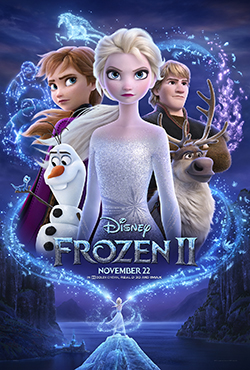
Another masterful creation of Disney is the second part of the Frozen franchise, echoing the story of two sisters, Elsa and Ann. Thiszen II, this movie ideates the aspects of eco feminism, just like Moan. Nature becomes empowered through women and their action driven by nurture, care, and love. The plot revolves around Elsa, who attempts to find out the origin of her powers and how she came to become the Fifth spirit bearing the power of ice in relation to the other elemental spirits of nature (fire, water, earth, air).
The film first starts with the ecological problem – the dam constructed by King Runeard the grandfather of the sisters, which set the two communities -the tribe of Northuldra and Kingdom of Arendelle at war leading the powerful spirits to destroy and hide everything under the guise of enchanted forest, its not until the destruction of the dam by sisters that reconstructs peace and harmony at both places reinstating nature as the channel of empowerment and feminism. Another aspect that is common in every movie is the anthropomorphic characterisation of Nature and Environment, the idea that nature can hear, feel, see, collect memories, be happy, angry, and bring justice and protection to everyone surrounding it.
In conclusion, to answer what exactly constitutes Nature it would take us an eternity to understand, meanwhile the movies reflect one sole message Nature is incredibly precious that demands our protection, just like it provides procurement and maintains the sacred balance between life and death it demands to be preserved, to be respected, to be loved as Nature is not helpless it can take just like it has provided to us humans therefore it’s our duty to walk towards finding harmony and co-exist just like the way the films showcases by remembering that Man never exists above nature but are simply the part of its wider existence.