On a humid evening in Vadodara’s old city, as the clang of the cycle bells mingles with the cry of hawkers, one suddenly finds oneself beneath the arches of Mandvi Pavilion. The four-sided structure, modest but commanding, is not just a traffic circle that thousands of residents brush past every day; it is the pulse point of a city whose streets, gates, and stories stretch back over a thousand years. To walk here is to step into a palimpsest of kingdom, ambitions, and quiet endurance.
Long before it was Vadodara, or its colonial alias Baroda, the settlement was known as Vatapatraka, a village on the banks of the Vishwamitri. Copperplate inscriptions from the 8th century mention it as one among many such hamlets in central Gujarat. For centuries, the settlement lay under the rule of local chiefs and, later, officers of the Gujarat Sultanate.
The decisive transformation came in 1511. Khalil Khan, son of Sultan Mahumud Begada of Champaner and soon to be Sultan himself, chose this site for a fortified city. He named it Kila-e-Daulatabad. This was no ordinary township: the new citadel was conceived as a square fort, its plan attributed to the architect Rumin Khan.
Legend holds that the layout was inspired by the board game Chopat (or Ludo), with two main streets crossing at right angles to form four equal quarters. At the very heart of this plan stood the Mandvi pavilion, while the outer walls were pierced by four cardinal gates: Lehipura to the west, Champaner to the north, Pani to the east, and Gendi to the south. The village of Vatapatraka slowly shifted into this new nucleus, laying the foundation of the city we know today.
Mandvi Pavilion: The City’s Compass
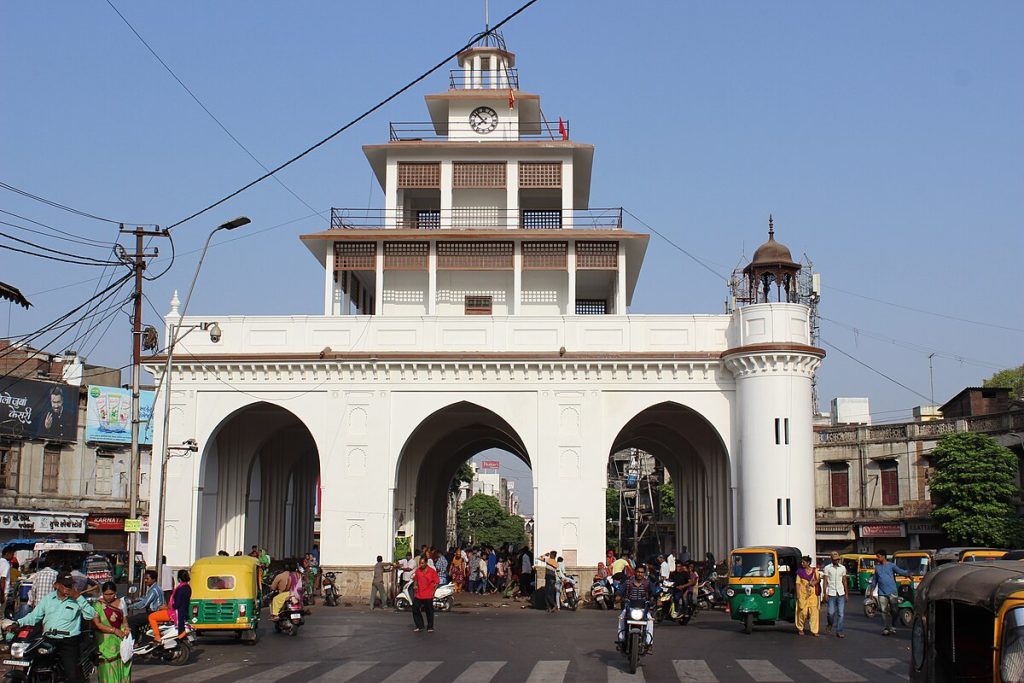
Mandvi itself was less a gate and more a mandapa- a pillared pavilion standing precisely at the intersection of the two great streets. It functioned as a toll-collection point, a stage for proclamations, and a marker of the city’s symmetry. Over time, Mandvi was rebuilt and embellished. The structure that stands today reflects not only Sultanate-era planning but also Gaekwadi patronage, notably its renovation in 1879 to commemorate the wedding of Maharaja Sayajirao Gaekwad III and Maharani Chimnabai, the first. Even stripped of ceremony, its presence is commanding: to cross under its arches is to orient oneself in the grid of the old city.
The Four Gates
Each of the four gates was more than a portal; they were guardians of the directions and, in some ways, storytellers of the city’s identity.
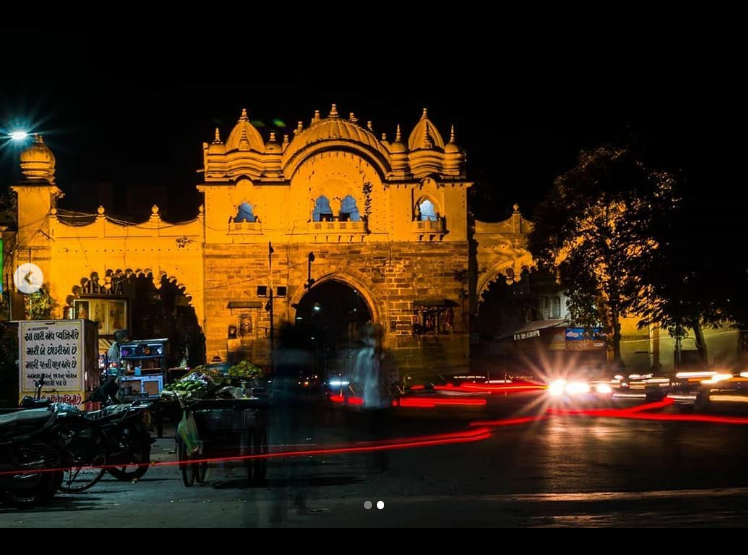
Lehripura Gate: The most ornate of the quartet, with decorative reliefs that hint at its later Gaekwadi embellishments. Linked to the coppersmiths known as the Leheris, this western gate acquired its most visible ornament in the late 19th century when Gaekwads refreshed facades to mark royal ceremonies. In the popular memory of the city, it was also where shehnai players once greeted processions, turning it into a ceremonial arch as much as a military one.
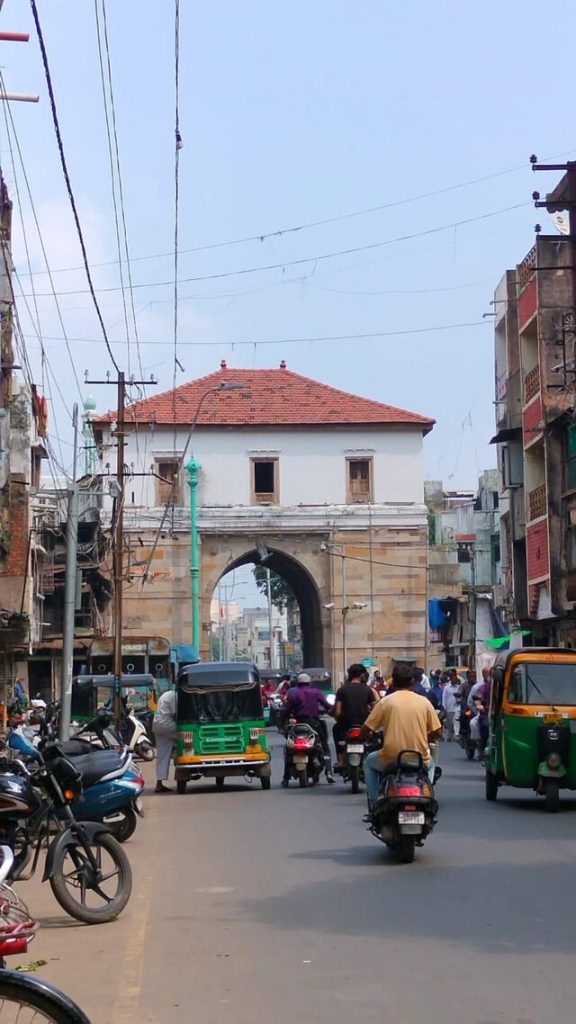
Champaner Gate: Facing north, this gate opened towards the road to Champaner, the erstwhile capital of the Gujarat Sultanate. More austere in detail, its importance is geographic, meaning that it connected Vadodara city to an older axis of political authority and pilgrimage.

Pani Gate: The gate is named for the lakes- Ajab and Raje- that once lay nearby and supplied the city with water. a small metal projection above its arch is affectionately in oral tradition called Vadodara nu Naak, the nose of the city, a symbol of pride and vulnerability. Parts of Pani Gate were repaired after structural collapse in recent decades; the repairs reveal a palimpsest of styles and purpose.
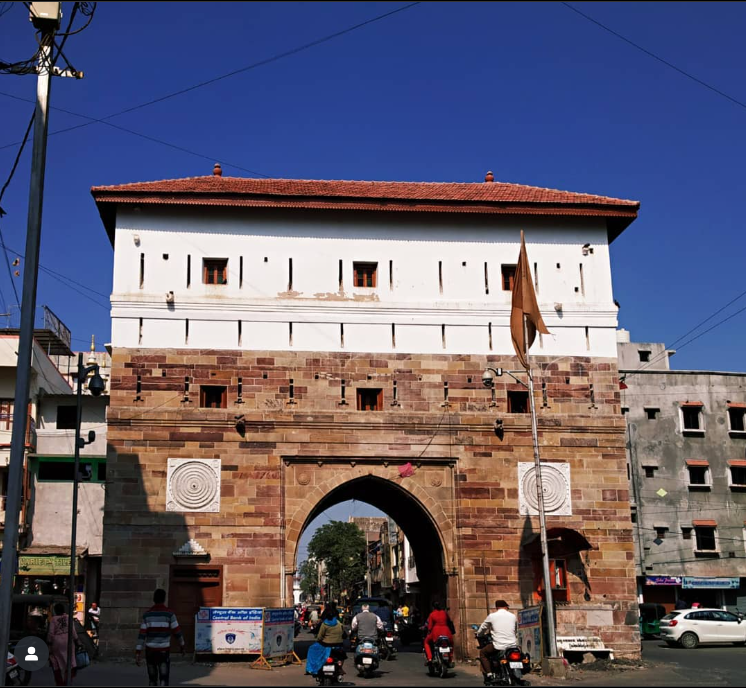
Gendi Gate: To the south, its name has sparked debate. Some link it to the rhinos (genda) once kept in royal menageries; others connect it to the Baranpura area it opened toward. Documents from the early 1800s also call it Baranpore Darwajam, suggesting a route toward Baranpura or even the road to Burhanpur. It is architecturally notable for the two-storey rooms above the gate, used as lookouts. Local historians have noted its sloping roof as an architectural curiosity distinct from the other three.
Together, these gates formed the quadrangle of Daulatabad, binding the city in symmetry and security.
Cycles of Power
The gates and Mandvi have been witnesses to centuries of turbulence. After the founding of Daulatabad, Vadodara remained under the Gujarat Sultanate until the Mughals swept in. In 1573, Akbar annexed Gujarat, assigning Vadodara to one of his nobles, Nawab Anurag Khan. Through the 1600s, the city endured repeated raids by Kolis and the advancing Marathas. In 1705, Koli raiders looted Vadodara for two days, a wound remembered in local lore.
By the early 18th century, Mughal authority had weakened to the point that the Marathas- specifically the Gaekwad family- took control. Pilaji Gaekwad established his base here, and in time Vadodara became the capital of one of India’s most prosperous princely states. The Gaekwads preserved and repurposed the old city core even as they constructed grand palaces, public institutions, and parks that reshaped Vadodara’s identity.
Baroda or Vadodara?
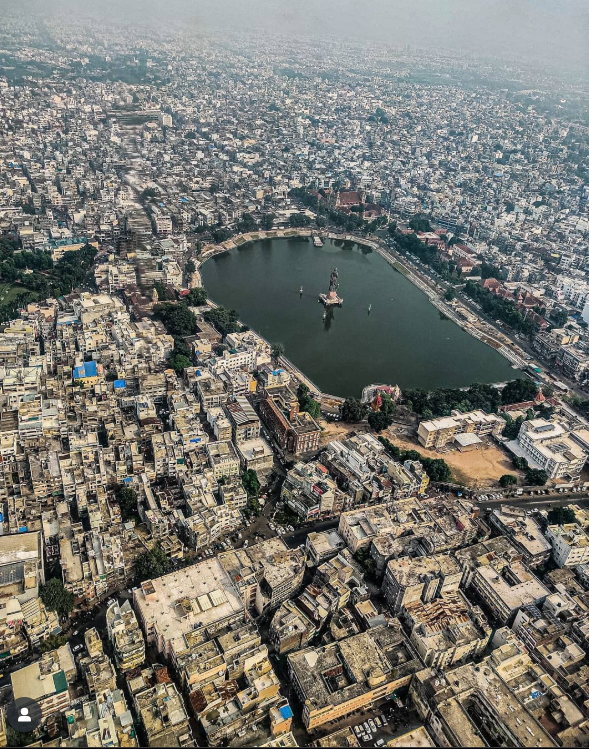
For much of the colonial era, the city was known as Baroda- a simplified, anglicised form of Vadodara. But the older name never disappeared from local usage. In 1974, the state government formally reinstated Vadodara as the city’s official name. Today, both survive in popular speech. Baroda as a nostalgic echo, Vadodara as an assertion of history and identity.
Layers of Change
Mandvi and the gates did not remain frozen in their 16th-century form. Mandvi itself has undergone at least two major renovations, including the 1879 modification tied to the Gaekwad royal wedding. Lehripura Gate was given ornamental flourishes. Others, like Champaner and Pani Gate, remained relatively austere. The fort walls that once enclosed the quadrangle have largely vanished, pulled down as the city expanded beyond its medieval boundaries. But the gates survive, stubborn markers amid new construction, rickshaw stands, and LED billboards.
Today, to stand at Mandvi or pass under one of the four gates is to glimpse the skeleton of a city that has constantly adapted. Vatapatrakam Daulatabad, Baroda, Vadodara- the names tell the story of reinvention. Each dynasty left its mark: Sultanate symmetry, Mughal oversight, Maratha resilience, colonial renaming, modern reclamation.
Unlike tourist brochures that list monuments as boxes to tick, the story of Vadodara and its gates is not about isolated landmarks. It is about a design that once held a community together, a fortification that grew into an urban city that today is often called Sanskari Nagari, and the way old stones continue to anchor urban memory. Even in neglect, these gateways remain entry points- not just to the old city, but to the layered narratives of Vadodara itself.