


By the mid-18th century, Mughal India stood as one of the richest and most sophisticated regions of the world. Yet, in 1750, a new force was rising, the British East India Company. With a private army twice the size of Britain’s own, the Company controlled nearly half of Britain’s global trade, dealing in everything from cotton, silk, salt, and spices to opium.
When Robert Clive seized Bengal in 1757, the Company gained control of one of India’s most prosperous provinces. Clive became the Governor of Bengal, overseeing tax collection and customs, a move that opened the door to Britain’s economic domination of the subcontinent.
At the same time, in Europe, fashion was undergoing a quiet change. The aristocracy, once limited by heavy silks and stiff brocades, started adopting a style that was lighter, freer, and more expressive. As vessels from India arrived in Europe laden with beautiful cottons, one fabric captivated European imaginations — Dhaka muslin.
The Marvellous Textile of Bengal
The exceptional quality of Dhaka muslin lies in its thread count. Although many contemporary fabrics typically have 100–150 threads per square inch, Dhaka muslin featured an impressive 1,200 threads per square inch. This imparted the fabric its distinctive transparency and delicate lightness, so airy that it was claimed a full-length dress could slip through a signet ring.
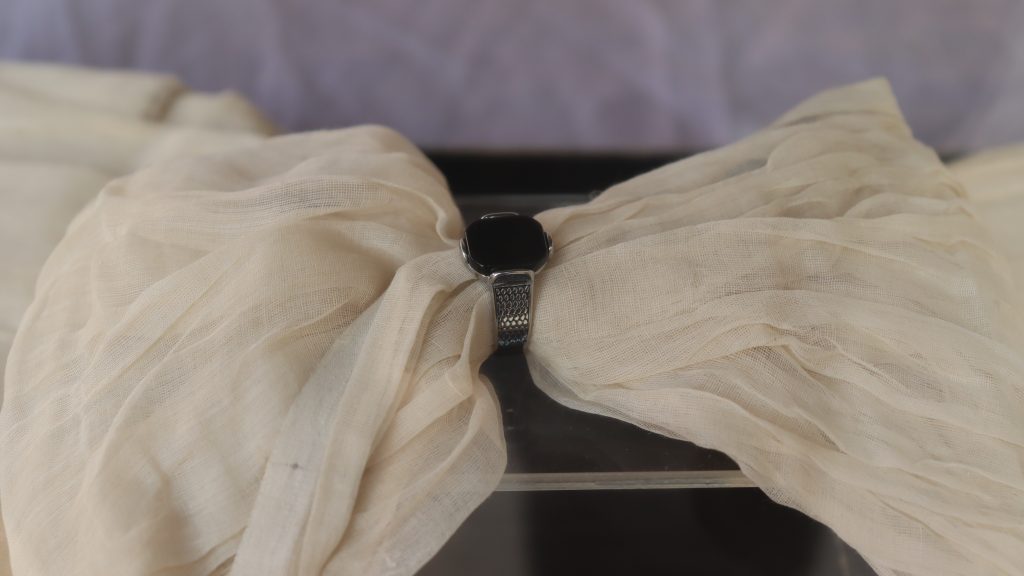
The making of this muslin was an art perfected over centuries. It involved a 16-step process, with each step carried out in a different village around Dhaka. The cotton came from a rare plant known locally as Phuti karpas, which grew only along the humid banks of the Meghna River in Bengal. The short, delicate fibres of this cotton gave the fabric its ethereal quality.
In the 1750s, a single piece of Dhaka muslin could sell for £50 to £400, equivalent to £7,000 to £56,000 today. Naturally, the East India Company saw an opportunity.
Exploitation and Erasure
After seizing control of Bengal, the Company forced independent weavers and artisans into its system, stripping them of their autonomy. They got a fraction of their previous salaries and were expected to create exclusively for the Company’s merchants. This mistreatment, combined with unfair taxation and restricted trade, devastated Bengal’s artisan economy.
The emergence of Dhaka muslin and different Indian cottons began to threaten Britain’s textile industry. In response, the British Parliament passed the Calico Acts, banning the importation of Indian cotton to protect domestic manufacturers. Instead of curbing demand, it spurred Britain to industrialise textile production, leading to the rise of cotton mills in Manchester and Lancashire.
In Bengal, the tale was sorrowful. The Phuti karpas plant went extinct, craftsmen lost their sources of income, and the age-old art of muslin weaving vanished. While the East India Company documented the 16-step method, it could never duplicate the artistry or the environment that created the famous Dhaka muslin.
A Legacy in Threads
Currently, muslin denotes a light, affordable cotton textile, a faint reminder of its imperial origins. The authentic Dhaka muslin, once valued by Mughal rulers and European monarchs, is now a forgotten craft, representing how colonial avarice dismantled both economies and complete artistic traditions.


