


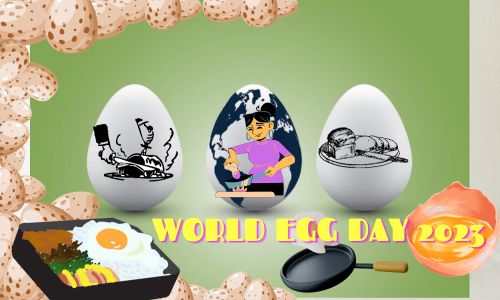
The extraordinary adaptability and nutritional value of eggs are recognized and celebrated on a special day known as World Egg Day.
Today we honor the common but humble egg and all the delicious ways that it can be used in global cuisines.
This article explores the journey of egg consumption in India as well as the significance of World Egg Day in 2023.
The theme for World Egg Day this year is “Eggs for a Healthy Future,” which highlights the incredible nutritional value of the egg and its potential to address widespread nutrient deficiencies.
Numerous countries in the world celebrate Egg Day as a food holiday dedicated to acknowledging the importance of eggs in your diet and their wide range of culinary uses.
Eggs are not only a staple ingredient in many dishes, but also a symbol of new beginnings and fertility. World Egg Day is a perfect opportunity to showcase its versatility and nutritional value. The remarkable adaptability of this delicious package of 13 necessary nutrients
This small package has a wealth of nutritional benefits and is also one of the most economical and environmentally friendly animal sources of protein.
Nature’s Nutritional Hero
Eggs can be a key component in eradicating prevalent nutrient deficiencies because they provide a wide variety of necessary nutrients and vitamins in one convenient and delectable package.
Iron and the vitamins D, A, and B12, all of which are present in eggs, are among the nutrients that are most frequently deficient in the world.
Many of the nutrients present in eggs are frequently underutilized, despite the fact that they must be consumed as part of a balanced diet to improve performance and prevent serious health problems.
Eggs’ high nutritional density makes it possible for them to support the body’s own immune system, promote physical growth, and support a child’s brain development.
Due to the bioavailability of their nutrients, eggs have the potential to significantly enhance human health outcomes all over the world and contribute to a healthy future for everyone.
The ultimate protein
The fact that eggs contain all nine of the essential amino acids makes them a “complete” protein. Eggs are the perfect match for the body’s needs because of the amino acid ratio and pattern they contain.
Egg protein aids in a variety of functions, including strengthening the immune system, reducing hunger, and building muscle.
Egg-cellent versatility
Eggs are a wholesome and convenient food option for people of all ages, including teenagers, expectant mothers, infants, and the elderly.
As a component or the main attraction of a dish at any meal of the day, eggs are incredibly adaptable.
The beginning of an egg revolution in India
Poultry farmers were dealing with two significant problems in the 1980s: first, there was not much of a market for eggs in the country, which is largely vegetarian.
In addition, a strong mafia of egg dealers controlled the prices of purchases made across the nation, working against the interests of farmers.
In this way, the middlemen and dealers made enormous profits, while the exploited farmers could only consider themselves fortunate if they were able to recoup their cost of production.
At that point, Dr. B.V. Rao, who had been influenced by Dr. Kurien’s (founder of AMUL) cooperative model for the milk revolution, undertook the enormous task of inspiring all the poultry farmers to band together and form an egg cooperative model that could contend with the swaggering of the dealer-mafia.
Dr. B.V. Rao was finally successful in establishing the cooperative model in 1982, as his efforts culminated in a nationwide movement that could coordinate between farmer groups.
Birth of the National Egg Coordination Committee (NECC).

NECC was formally registered as a trust under the Indian Societies Registration Act in May 1982, and on May 14, 1982, NECC began declaring egg prices.
The National Egg Coordinating Committee revolutionized the poultry industry. Among the major functions of the National Egg Coordination Committee which includes the announcement of egg prices.
The NECC has established itself as a pillar for sector reform. Egg prices, demand, and supply fluctuate from time to time.
After the issue of farmer exploitation was resolved, the task of raising egg consumption arose. Attempts have been made to persuade more Indians to include eggs in their diets.
In addition to offering free eggs at busy intersections in big cities, NECC launched a variety of promotional initiatives. Soon, NECC understood that India required an aggressive marketing effort to make eggs acceptable to vegetarians as well.
At that point, NECC made the decision to collaborate with some of the best advertising minds and well-known personalities to produce highly enticing jingles (“Sunday ho ya Monday, Roz khao ande”).
Dr. Rao called it ‘My Egg, My Price, My Life’. Today, NECC is the world’s largest single association of poultry farmers and has significantly contributed to the betterment of the egg and poultry businesses. However, in the early days, there was an urgent need to create demand and stem the deteriorating business conditions.

Eggs were portrayed as wholesome foods that anyone could eat on a daily basis, regardless of caste, class, or religious affiliation. The public was moved by the campaign, which swept the country and touched a nerve with the general public. Over time, more people began to accept eggs as a regular supplement.
Although it was only a cooperative and had nothing to do with the government, most viewers mistook the N in NECC for “national,” giving the impression that it was a government organization. Nevertheless, this perception helped the marketing campaign gain serious attention as more people adopted it as a “government-recommended” diet.
The easiest and most surprising part of the phenomenon, though, was how quickly some vegetarians began incorporating eggs into their diets and eventually fell into the new category of “Eggitarians.”
By the turn of the century, the campaign had thus successfully achieved its goals, as the per-capita consumption of eggs among Indians increased multifold within a generation. At the same time, it helped the poultry farmers feel empowered, as they were not at the mercy of the dealer mafia anymore.
An ‘Egg’cellent Campaign
To establish eggs as a nutritional ‘super-food,’ a print campaign aimed at educating people about their nutritional value was launched. One print advertisement, for example, featured an oval egg with the headline “The best square meal in the world?” The aim was to get people to consider adding eggs to their diet.
Other advertisements emphasized people with special nutritional needs, such as mothers, pregnant or nursing women, and children.

Novel and tantalizing recipes like egg chaat and biryani were showcased in another series of advertisements to overcome the perception of eggs being ‘boring’. This was done to appeal to a broader audience and encourage them to include egg dishes throughout the day, all year.
Anand Halve devised the concept, “Have you had an egg today?” This served as the basis for the NECC commercials. The following television commercial was created: Sunday ho ya Monday, roz khao ande.
Devang Patel sang the energetic commercial. It was based on the popular Hindi song “Meri Jaan, Meri Jaan, Sunday Ke Sunday,” which was popular among both children and adults.
The message is still resonating. Whether it is Sunday or Monday, served sunny side up or in gravy—roz khao ande!
Do you know?


