A pristine, clear lake, filled with human remains like skeletons, is very hard to imagine and define. But it’s true and present in the land of Uttarakhand, a relevant travel destination. Many mysteries and folklore exist regarding Roopkund Lake.
Roopkund Lake, also called as the “Skeleton Lake of India,” is a high-altitude glacial lake situated at an elevation of 5,020 meters (16,470 feet) in the Himalayas. It is located between Trishul Peak (7,120 meters) and Nanda Ghunti Peak (6,310 meters) in the Chamoli District of Uttarakhand, India. The lake is characterized by its pristine clarity and is enveloped by snow-capped mountains and verdant meadows.
Roopkund Lake is a prominent trekking destination, attracting adventurers and nature enthusiasts globally. The trek to Roopkund is renowned for its dangerous terrain, which includes steep ascents, rocky paths, and unreliable weather conditions. This trek traverses the alpine forests of Rhododendron and oak, showcasing the region’s rare flora and fauna. The total length of the trek to Roopkund Lake is approximately 53 kilometers, typically requiring 7 to 8 days to complete. During the Roopkund trail, trekkers are afforded breathtaking views of notable peaks such as Kedarnath, Chaukhamba, Neelkantha, Trishul, and Nanda Ghunti.
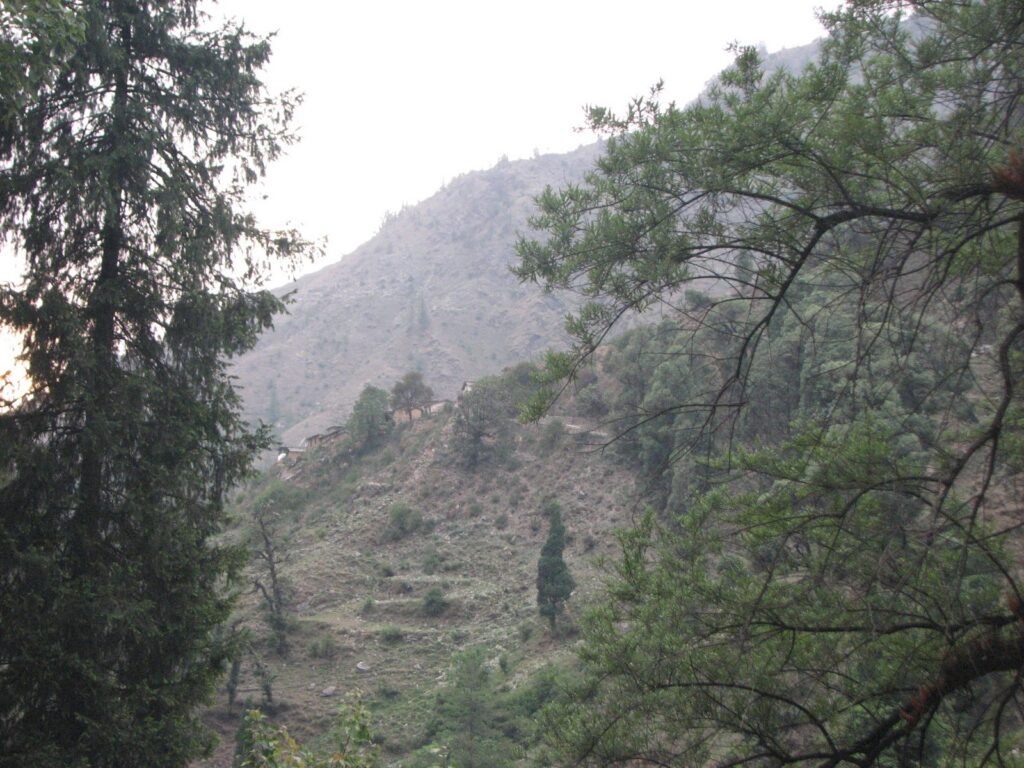
The trek originates from the Himalayan village of Lohajung, located in the Chamoli district of Uttarakhand. The name ‘Lohajung’ refers to ‘War with Iron,’ derived from a mythological war between the goddess Parvati and a demon named Lohasur. Lohajung is well-connected by road to Rishikesh and Dehradun and serves as a base camp for numerous treks, including the Brahmatal trek.
The route to Roopkund passes through the twin Bugyals of Ali and Bedni, which are expansive grass fields adorned with vibrant wildflowers, typically found above an elevation of 3,300 meters in the Himalayas. Along the Roopkund trail, one can enjoy remarkable views of famous peaks such as Kedarnath, Chaukhamba, Neelkantha, Trishul, and Nanda Ghunti. Additionally, Roopkund serves as the site for a significant religious event in Garhwal known as the Nanda Jaat Yatra, which is organised after every twelve years and attracts thousands of participants, many of whom continue their pilgrimage to Roopkund.
The area surrounding Roopkund is largely uninhabited, with the nearest village, Wan, located over 30 kilometres away, requiring a three-day walk to reach the base camp. The weather conditions in this region are highly sensitive to altitude variations, and for nearly ten months of the year, the area remains snow-covered. Only the months of August and September are preferred and recommended for tourism. This region is also home to several rare Himalayan flora species, including Saussurea obvallata, Saussurea simpsoniana, Saussurea piptathera, Saussurea gosipipora, Cryptogramma crispa, and Rihum.

Theories and mysteries insights: Initially, researchers thought that the skeletons belonged to Japanese soldiers who perished during World War II while attempting to cross the Himalayas. This was rejected by radiocarbon dating. Initial scientific studies, particularly in 2013, suggested that the skeletons belonged to a group of 9th-century Indian tribesmen and pilgrims who perished in a sudden and severe hailstorm.
Forensic analysis revealed blunt, round injuries on the skulls and shoulders, consistent with being struck by large, cricket ball-sized hailstones or ice balls falling from above.
overIn 2019, a study was conducted, which involved researchers from India, the United States, and Germany, adding complexity to the ongoing investigation of certain skeletal remains. The findings indicated that these remains did not originate from a singular event or group. Rather, they were associated with a genetically diverse population that perished over a span of approximately 1,000 years. The analysis revealed three distinct genetic groups, corresponding to South Asian, Mediterranean, and Southeast Asian ancestries.
According to the mythological context, it is said that Lord Shiva created the lake using his trident for his wife, Devi Parvati, to purify herself after her conflicts with demons. Upon seeing her reflection as Roop in the lake, known as “Kund,” comes the name “Roopkund.”
Additionally, the “Pathar Nachauni,” or Dancing Stones, along the route to Roopkund, are tied to local folklore, suggesting by anger, God transformed the dancers into stone in this location.
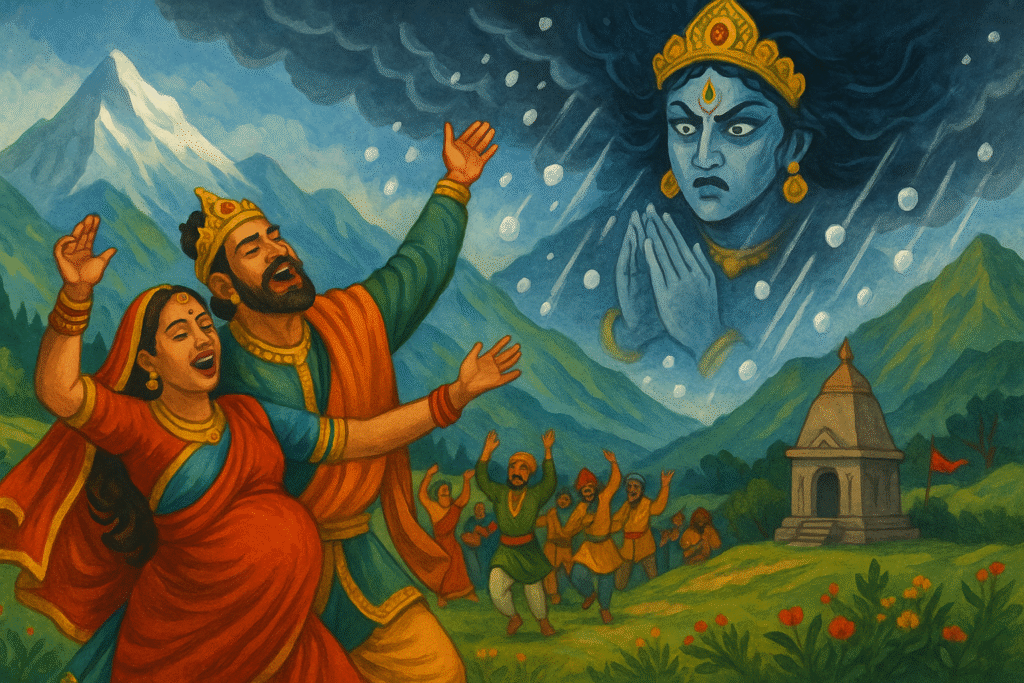
A story related to King Jasdhawal of Kanauj, who embarked on a pilgrimage to the Nanda Devi mountains with his pregnant wife, Queen Balampa, to celebrate the anticipated birth of their child. They arranged a party with lively singing, dancing, and the preparation of meat—it demolished the purity of that place and sacred of Goddess Nanda Devi. In response to their audacity, the Goddess punished them in anger with a fierce hailstorm, resulting in the demise of the entire group, including the king, queen, and their unborn child.