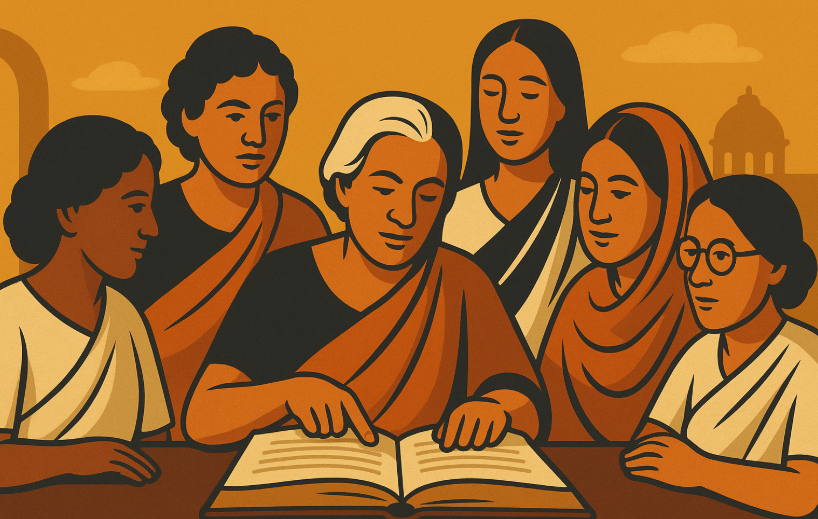
The Indian Constitution is referred to as a living document that acts as the collective ambition of the leaders who built the pillars of the Indian nation. Some of these leaders were actually 15 extraordinary women in a Constituent Assembly that consisted of 299 members, from a country that had just enabled women, for the very first time, to actually vote.
The women Sarojini Naidu, Hansa Mehta, Durgabai Deshmukh, Rajkumari Amrit Kaur, Renuka Ray, Vijayalakshmi Pandit, Purnima Banerjee, Leela Roy, among many others, were pioneers who carried the voice of Indian women through to the Constitution.
These were not just women, but reformers, freedom-fighters, and leaders who had considerable knowledge about gender issues. Their debates and interventions made gender justice a founding ideal of the Republic of India.
Hansa Mehta was a vocal supporter of gender equality in relation to personal laws and, of course, had made a contribution to women’s rights in our Constitution, with all her left-of-centre ideology and philosophies.
She was also a member of the UN Human Rights Commission and celebrated her “win” in changing “all men” to “all human beings” in the Universal Declaration of Human Rights because it symbolised her beliefs of inclusion and equality.
Durgabai Deshmukh was another illustrious member who was a wonderful promoter of women’s education and equal opportunity. However, like Hansa Mehta, Durgabai Deshmukh was not just an advocate of women’s education but was also an activist for social reforms, including marriage and property rights for women.
Rajkumari Amrit Kaur would become the first Health Minister of Independent India, and was a vigorous campaigner for women’s healthcare and educational opportunities, violence against women and the eradication of child marriage.
Sarojini Naidu, the “Nightingale of India,” somehow brought an extra measure of freedom, equality and empowerment into these discussions inside the Assembly. Sarojini certainly offered a strong voice to a very “women-centric” agenda, given the historical context of being part of a largely male body.
The Constitution explicitly reflects their contributions through provisions on gender equality. Article 14 guarantees equality before the law while Article 15 prohibits discrimination based on sex, among other things. Article 15(3) allows the state to make special provisions for women and children, recognising that they are in need of protection.
Article 39(d) in the Directive Principles states that they provide for “equal pay for equal work for both men and women”, whereas Article 42 provides for maternity relief and even humane conditions of work for women.
The provisions serve to highlight the degree to which the women members influenced the drafting of laws that would nominatively seek to create a more just and equal society.
Article 51A “Fundamental Duties,” originally introduced as an addition after the rest of the Constitution was drafted, even includes the requirement of respecting the dignity of women, which resonates with their aspirations.
These women were not just involved in the constitution debates; they also devoted their lives to social reform and action, and their legacy continues to help India achieve gender justice. After independence, laws such as the Equal Remuneration Act of 1976 and others have been shaped by the constitutional values they both share.
The 73rd and 74th amendments to the Indian Constitution, reserving a certain number of seats for women in local government, are the next steps toward the inclusive democracy these women nurtured.
Despite ongoing efforts, gender justice has not become a reality throughout India. Women face insufficient representation in legislative bodies, which has resulted in the persistence of numerous critical problems, including wage disparities and violence based on gender and discrimination.
The Women’s Reservation Bill 2023 represents actionable progress because it proposes 33% of seats in the Lok Sabha and state assemblies to be reserved for women, which aligns with the intentions of the 15 women who took courageous action.
The drafting process of the Constitution shows that women showed strong determination, along with foresight and resilience, to establish an Indian society that makes equality practical instead of theoretical.
The inclusion of women’s rights within the Constitution created opportunities for subsequent gender justice movements to achieve their goals. Through their actions, women demonstrated that equality requires extensive effort, yet every path toward equality begins when brave individuals demand representation at decision-making tables.