



Indians have always been incredibly connected with nature. For us, nature does not form a backdrop but instead becomes the central theme of all our art forms, laying the foundation of our traditions, culture and beliefs. From musical compositions to dance performances, from theatrical splendours to literary masterpieces, the beauty of nature and the love we commonly share for it are deeply reflected in all of our art forms.
While nature in its entirety holds a special place in the Indian performing arts, it is the rain or the monsoon that can often be seen as a particularly cherished and recurring theme. The dark, heavy clouds, all encompassing in nature, evoking a bittersweet gloominess, then the loud boom of a thunderous lightening, offering a glimpse of what is to come ahead and finally the tiny beads of water, trickling down from the mighty heavens and cooling down the burning earth, rejuvenating everything that they touch; this description is intrinsic to all of our artistic expressions.
Rain’s Dual Role on the Classical Stage: Peacock’s Joy, Nayika’s Trial
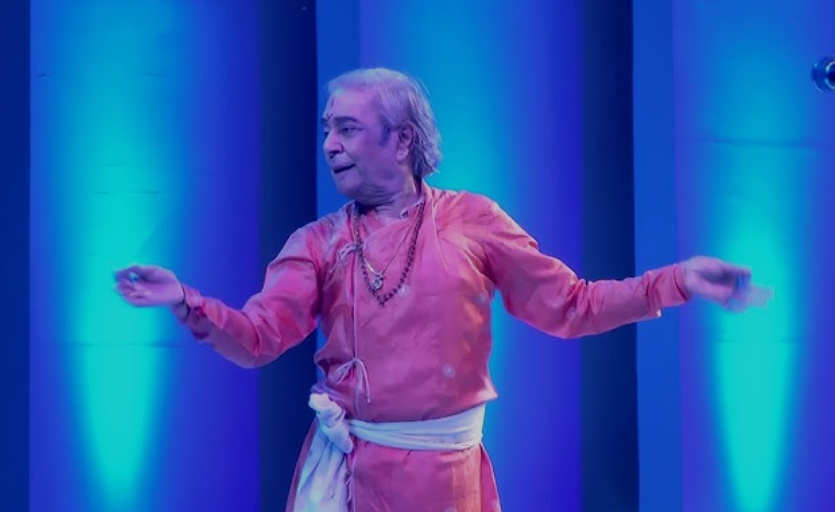
Rain is always explored beautifully and celebrated deeply in the Indian classical music and Dance. In classical dances, rain forms an integral part of the Gat Bhaav, which is the rhythmic and stylised walk performed by a dancer, often depicting abstract scenes or the movement of an animal. We see fantastic depictions of an ecstatic peacock, eagerly awaiting the rain, spreading its glorious plumes in joy.
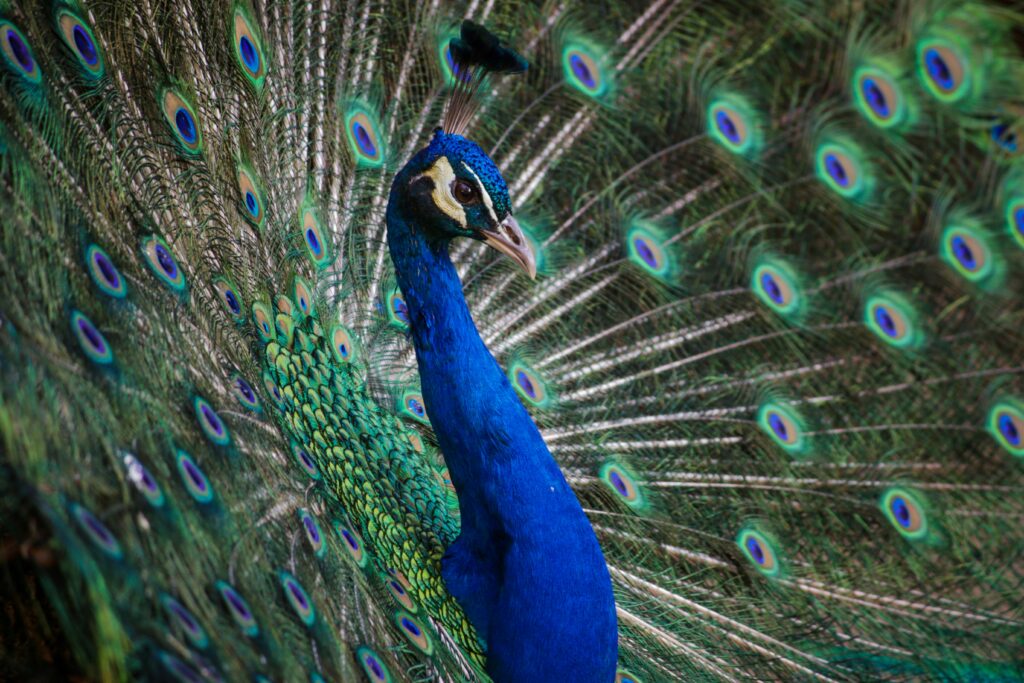
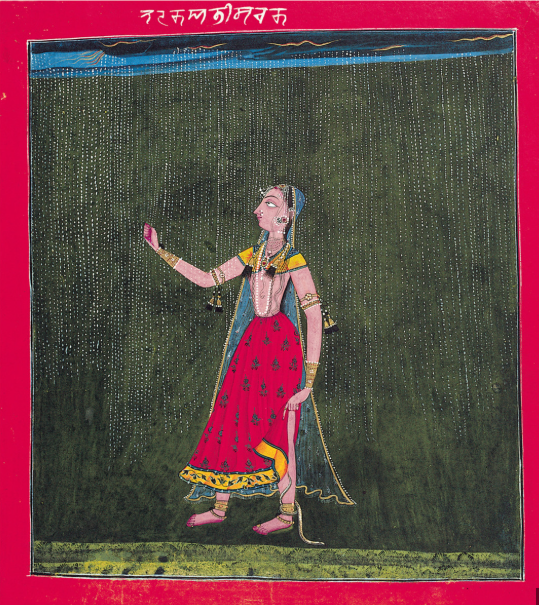
The dancers try to entirely embody a peacock and express its feelings of eagerness, excitement and ecstasy, all through facial expressions and light bodily movement. Rain, in this instance, acts as a ray of hope and reason for happiness and joy. Another striking instance in classical dance comes in the form of a Nayika, specifically the Abhisarika Nayika, a heroine who braves through many a deadly storm and other obstacles solely to go meet her beloved.
Here, however, we see a stark contrast, and rain becomes an adversary; it becomes an obstacle rather than being a source of joy. Rain here proves to be both a ray of light as well as a shadow, which is all encompassing.
Malhar Magic: The Monsoon Rāga That Calls the Rain
When it comes to Indian Classical Music, there are entire Raagas, solely dedicated to the Monsoon season. Raag Malhar is the most prominent and popular amongst these. This Raag and its various types are sure to evoke the feelings of calmness, introspection and a bittersweet nostalgia in the hearts of the listeners.
The melodies based on this raag are crafted quite beautifully with an attempt to capture the different sounds of rain, from its gentle drizzles, to slow showers, to even a catastrophic downpour, all depending on the specific type of Malhar.
Rag Miyan Malhar/राग मियाँ मल्हार Via NCERT Official:https://youtu.be/2uXSCTueyLc?si=YWfEgJI2U6AiMSlz. Edit By PMN Patralok
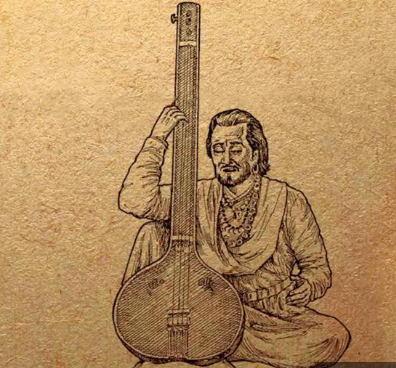
Out of these, Miyan Ki Malhar is quite well known and is an incredibly powerful raag, famously associated with the legendary singer Tansen. Miyan Tansen was considered to be one of the nine jewels in the court of the Mughal Emperor, Akbar. This raag is believed to be his composition and hence the name ‘Miyan ki Malhaar’.
Malhar is an incredibly powerful raag, so much so that it is believed that Tansen used to sing it to summon rains. The brilliant composition of this Raag is sure to make one feel powerful emotions of joy, nostalgia, and at times, a sentimental melancholy, often associated with the season of monsoon.
Bollywood’s Monsoon Muse: Malhar Echoes on the Silver Screen
The beauty of these Raagas is such that they have not only given birth to many soulful classical compositions, but have also managed to heavily influence Hindi Cinema. Lovely compositions like “Garajat Barasat Saawan Aayo Re” from the movie Bhanwara are based on classical raagas, like Miyan Ki Malhar.
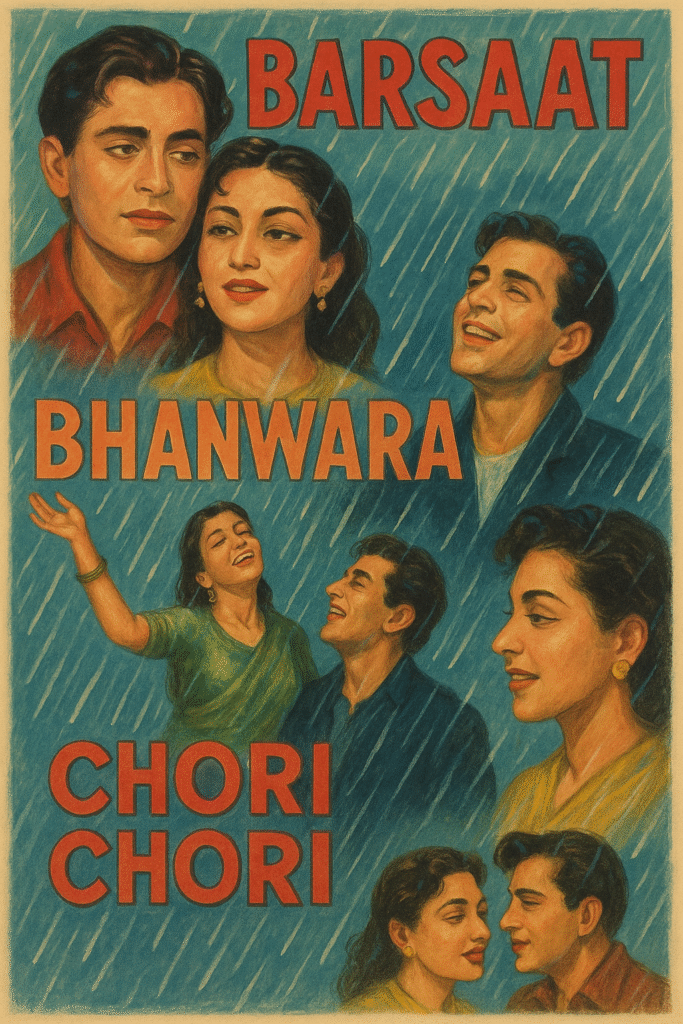
The lyrics by Sahir Ludhianvi and the soulful sound of Suman Kalyanpur and Kamal Barot, accompanied by the music direction of Roshan, make this composition sure to bring with it moments of blissful nostalgia and longing, emotions often closely connected with rain.
Monsoon Mirrors the Human Heart: Why Rain Resonates Through the Ages
But now the question arises, why is rain so greatly revered in our culture?
Why are so many compositions heavily influenced by the monsoon season, and why is it that these compositions never seem to wither away with time? Instead, the love for them only seems to grow? The answer can be found in the very rain that our culture so deeply admires. Rains, like humans, have different, powerful forms. Rains can be loving, offering solace in a soft drizzle, but can also turn into disastrous downpours in a heartbeat.
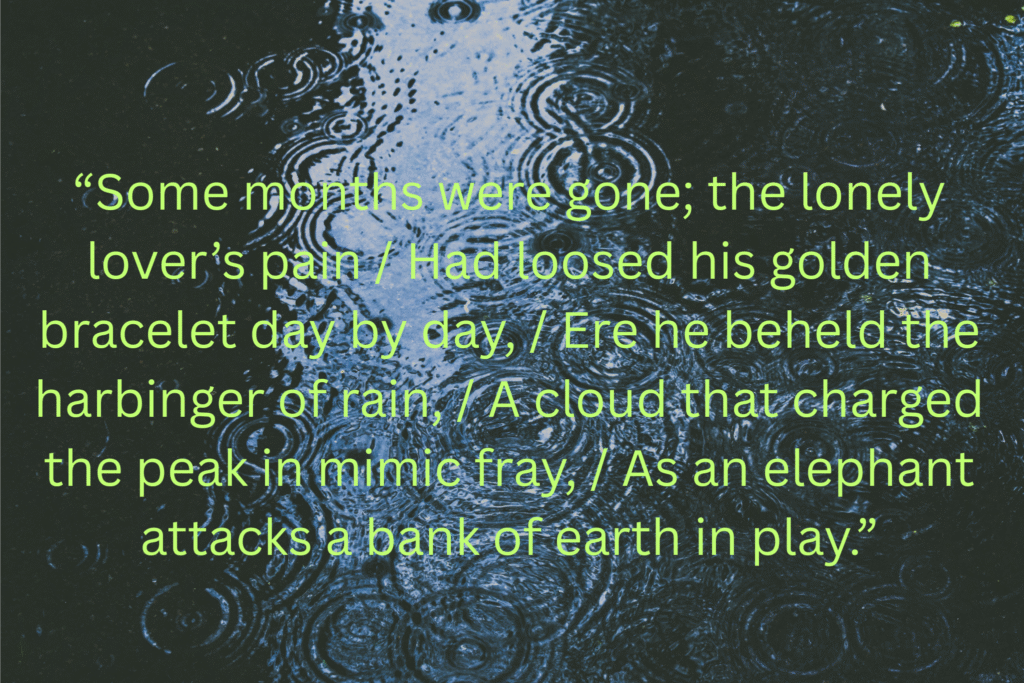
Humans, like rain, have powerful emotions; our ecstasy can turn into deep sorrow in the blink of an eye. That is why we resonate with the monsoon. Monsoon brings with it a gloominess and a sense of longing, which most humans seem to dwell in, in all stages of their lives. Whatever may be the cause of this gloominess, the rains seem to understand it. Maybe that is the reason for Kalidas to choose a cloud, heavy with rain, to pass on the Yaksha’s message of love and longing to his beloved, living miles and miles away from him, in his fantastic composition “Meghdoot.”
Not only Kalidas but many modern-day lyricists take inspiration from rain and the emotions attached to it. Heartfelt Hindi songs with lyrics like “Aaoge jab tum sajana, angana phool khilenge… Barsega saawan jhoom jhoom ke, do dil aise milenge” rightly encapsulate the joy that the return of a beloved causes. It is almost synonymous with the bliss that the rain brings to the scorching earth, a moment of profound connection, after a prolonged separation.
Ignore Her Rhythm, Face Her Rage: Monsoon’s Unforgiving Warning
It is this deep similarity between the nature of humans and that of the monsoon that proves to be a strong reminder and brings out the fundamental truth that we, in fact, are a part of nature and not separate from it.
Nature is a great force, and we are merely tiny specks in its large canvas. Driven by the hunger to dominate everything, humans have somehow shaken the foundation of our culture, strongly based on love and reverence for nature, and have lost the natural balance, leading to devastating consequences. Flash floods, Landslides, Torrential Rains that we are currently witnessing are a strong reminder that if Nature is disrespected, it will surely respond!



Very well written indeed. Good research 👍
So well written.Super proud of you love