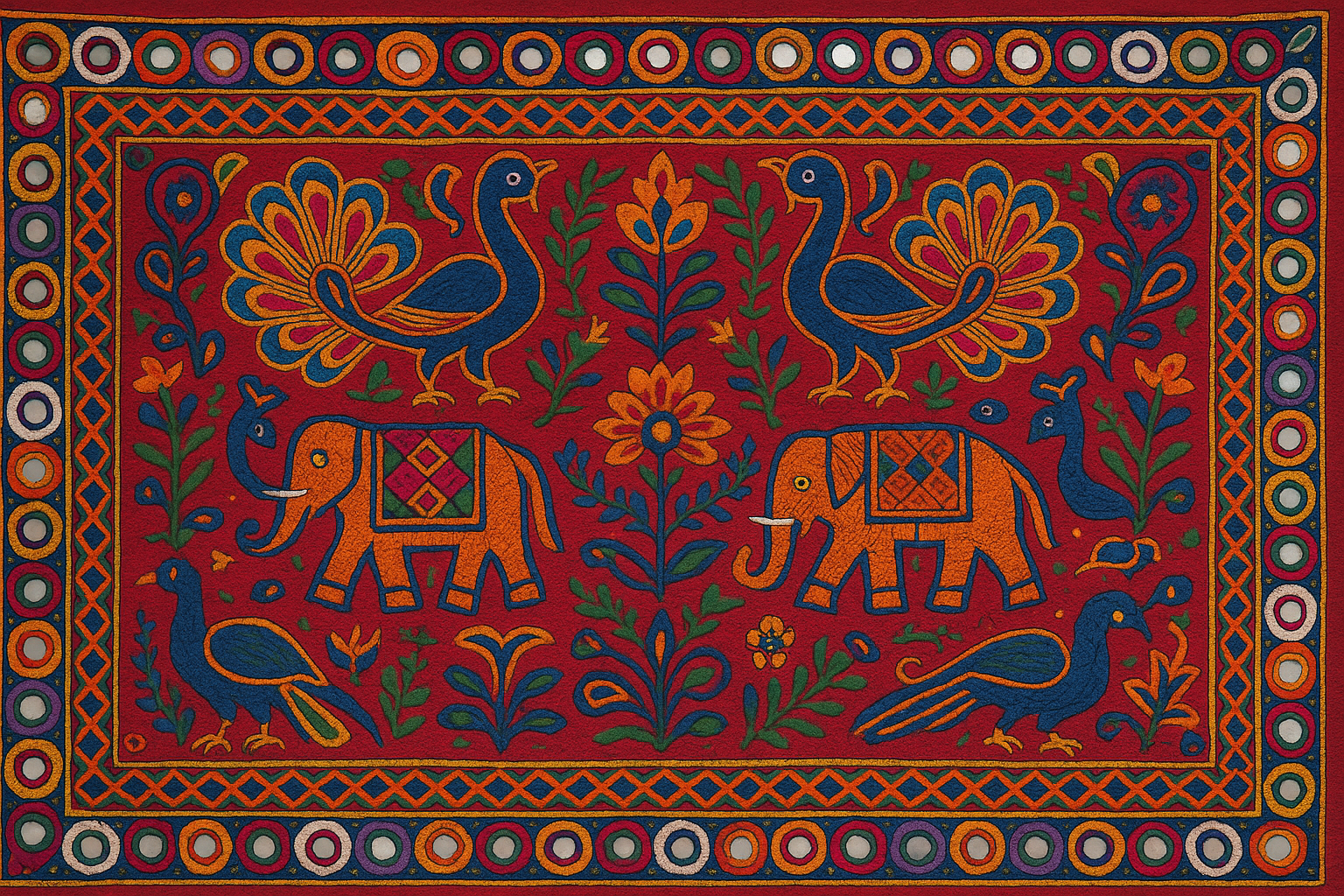
On the broad canvas of Indian needlework, Kutch embroidery is a shining example of cultural heritage, detailed craftsmanship, and tradition-shaded artistic identity. Born in Gujarat’s Kutch district, this rich, colourful art of embroidery is anything but cosmetic stitchery, but a zealous pursuit in storytelling, assertion of self, and a provoking icon of collective pride that has weathered all storms.
What is Kutch Embroidery?
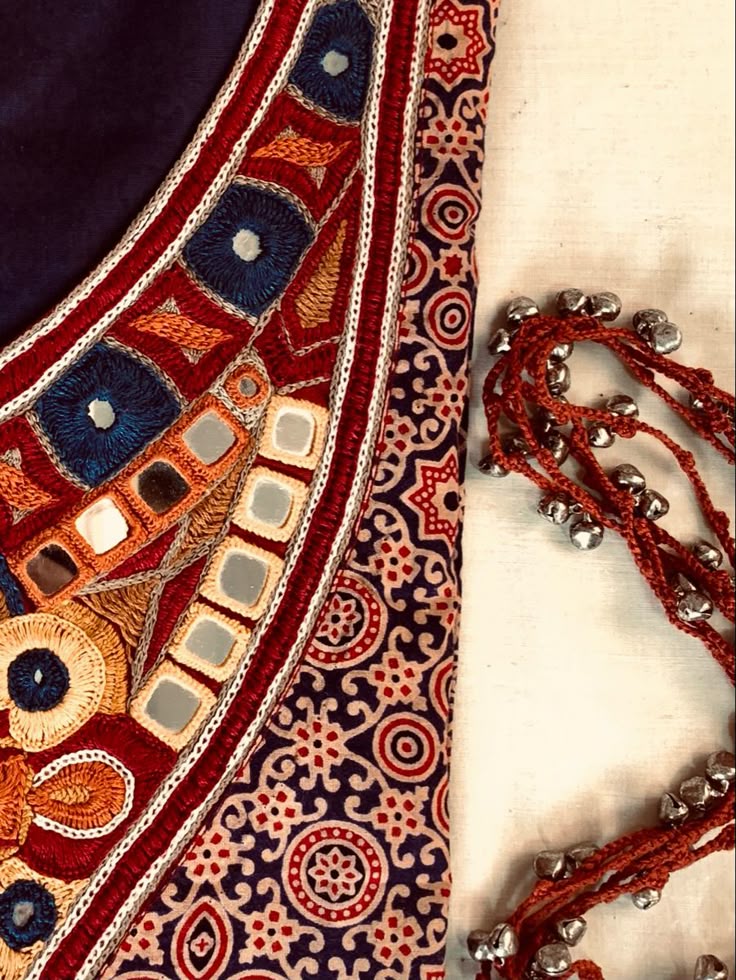
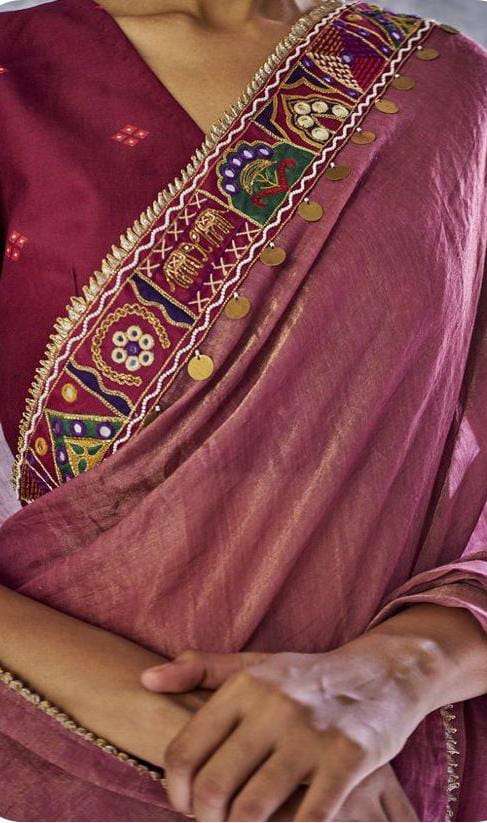
Kutch embroidery, or Kutchi Bharat, is an embroidery produced mainly by rural women in the Kutch region of the Gujarat state. It employs mixed colors, thick motifs, mirrors (abhla), beads, and fine threadwork. It differs from others because many details and cultural symbolism are built into every piece of work. Embroidery was previously done by hand with silk or cotton yarns on silk or cotton cloth.
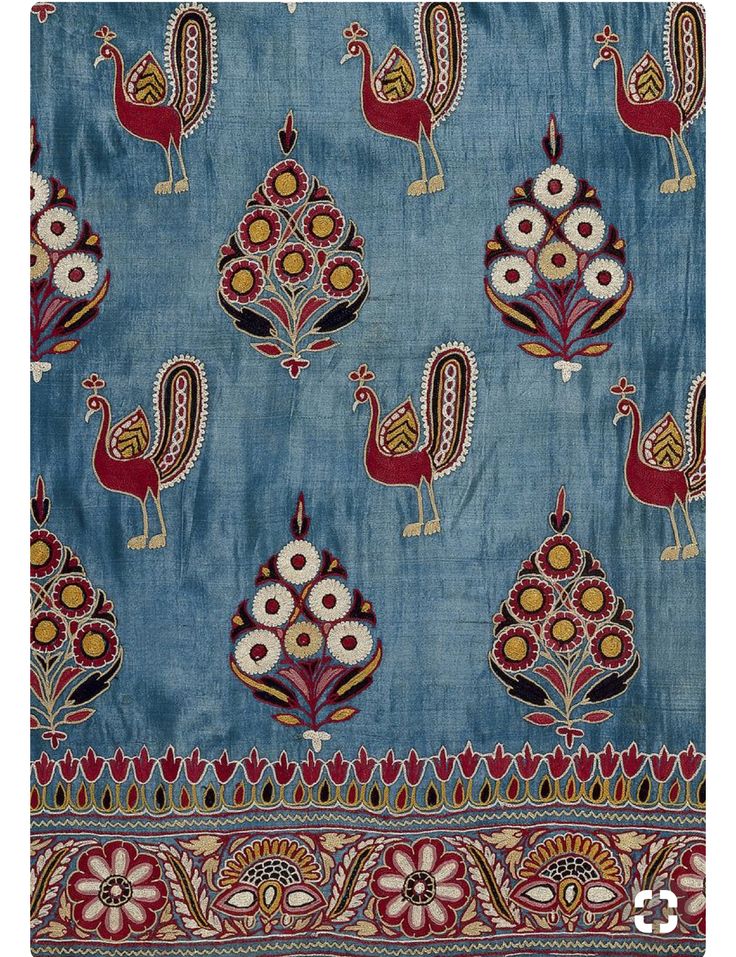
The designs are commonly derived from nature—peacock, elephant, flower, tree—and even geometrical designs, mythological history, and local mythological legends. The most interesting feature is that every community within Kutch has a distinct design of embroidery, so the fabric is an alive map of the cultural diversity of the region.
The Kutch Region: A Land of Art in the Desert
In the west of Gujarat, Kutch is a semi-arid and arid district of white salt deserts, colorful festivals such as the Rann Utsav, and century-old handicrafts. In contradiction to its barren landscape and harsh lifestyle, Kutch is, nevertheless, a crucible of artistic activity. Its villages are teeming with highly skilled artisans who have handed down their craft traditions from generation to generation. Kutch embroidery is more a way of life—it’s an art of living.
Kutch’s geographical location as an ancient center of commerce between India, Persia, and Sindh facilitated the evolution of its vocabulary of art through a blending of local Indian sensibilities with Central Asian and Islamic sensibilities.
A Glimpse Into History
Kutch embroidery is centuries old, and according to historians, embroidery was introduced to Kutch by nomadic groups such as Rabaris, Ahirs, Meghwals, Sodha Rajputs, and Mutwas from Afghanistan and Sindh. The nomadic groups migrated and settled in different villages surrounding Kutch and created their own embroidery designs as a means of identification and expression.
Before that, the small girls would start learning embroidery as dowry education since early childhood. The bride would hire someone to take to her wedding house hand-embroidered items, showing her patience and skill. They used to have clothes, domestic utensils, torans or entrance facades, and even ritual and animal coverings.
Surprisingly, embroidery could be employed as an unspoken language—certain designs and color combinations could be used to convey marital status, belonging to a community, or even place of birth.
Styles Within the Style
One of the nicest things about Kutch embroidery is that there are numerous different styles, each unique one being the style of a village or community. Some of the most well-known styles are:
- Rabari Embroidery: Rich, heavy, thick designs and heavy use of mirrors, usually red, black, and white.
- Ahir Embroidery: Thick with floral and animal designs and intricate, precise stitches and mirror work.
- Mutwa Embroidery: Extremely rich and subtle, made up of slender stitches in thin cloth, usually of geometric designs.
- Jat-Garasia Embroidery: Geometric latticework with mirrors sewn in the corners.
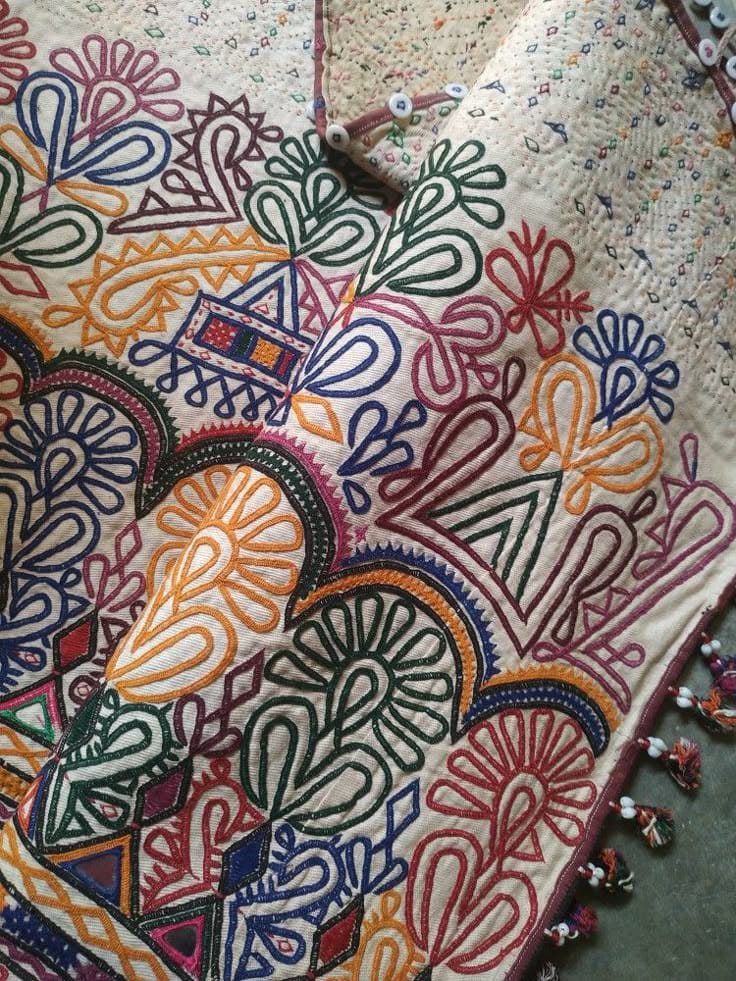
These are not mere appearances but visions of cultural tradition and heritage.
The Process: A Skill Passed Down through the Ages
The process of embroidery is tedious and time-consuming. The worker initially draws the design approximately on the fabric itself. With the use of a combination of aari (hook) or needle, the worker then embarks on embroidering the design step by step for hours. The conventional stitches include herringbone, satin, chain, and interlacing, though these are reinforced with sequins and small mirrors.
Embroidery is usually performed in social circles where women sit together and sew, sharing tales, keeping tradition alive not only in form but in spirit as well.”
Cultural Significance and Symbolism
Kutch embroidery is not possible to dislodge from traditional rituals, ceremonies, and social life. From birth to marriage, from festivities to death, embroidered fabric never appears misplaced. For Rabari culture, for instance, the decorative work on a woman’s veil can indicate something about her social ranking. In some groups, embroidered fabric is offered as adoration in religious ceremonies or taken to be magic protective charms to ward off evil spirits.
Aside from symbolism, the embroidery is also oral history in its own right—chronicling local culture, wildlife and vegetation, and the life of people in thread.
Global Influence and Revival
During the last decades, Kutch embroidery came into international prominence due to its beauty and intricacy. It has been used as a common pattern in fashion as well as home furnishing markets. Foreign designers such as Ritu Kumar, Sabyasachi Mukherjee, and global brands have added elements of Kutch embroidery to their product lines.
NGOs and craft groups have also played an important role in reviving this art form and keeping it alive by assisting the local artisans in accessing markets, enhancing the quality of the product, and paying them fair wages. Shrujan, Kala Raksha, and Khamir are a few such groups who have empowered rural women by making their forgotten skills remunerative livelihoods.
Indian government also categorized Kutch embroidery in the Geographical Indications (GI) Act, which provided it with a legal name and saved it from adulteration.
Challenges and the Way Forward
Kutch embroidery, even more famous as it is becoming, is facing threats. Mass production, imitation, and non-documentation are threats to its validity. Also, coming generations are switching towards today’s occupations more forcefully at the cost of the ancient art form.
But today, with new waves of conscious consumerism, green fashion interest, and initiatives by craft activists, people are again fascinated with traditional crafts such as Kutch embroidery. Fashion tie-ups, workshops, and global exhibitions are bringing this village craft to the global stage.
A Thread That Binds
Kutch embroidery is not about flashy threads and mirrors—about gimmickry and cuteness. It is an alive tradition, a history book, and a means of empowerment. It is instructive in the power of creativity in the most repressive of situations and in the safeguarding of cultural identity stitch by stitch.
With each successive term of globalization, Kutch embroidery brings to mind the fleeting nature of human dignity and of traditional handicrafts, the patience, and richness of world cultural diversity. It is quite a thread which stitches past to the present, the world’s fashion history.