Women Officers Brief on Operation Sindoor, Symbolising Unity and Shifting Military Dynamics
New Delhi – In a swift and coordinated military retaliation dubbed Operation Sindoor, the Indian Armed Forces launched precision strikes across nine terror-linked locations in Pakistan and Pakistan-administered Kashmir early Tuesday morning. The strikes come just over two weeks after the Pahalgam terror attack on April 22, which claimed the lives of 26 civilians, predominantly Hindu pilgrims, in Jammu and Kashmir.
The operation was confirmed in a high-level tri-services press briefing held in New Delhi, with senior officials from the Indian Army, Air Force, and Navy jointly addressing the media. “This was a measured response with surgical precision, not an act of escalation but of deterrence,” said Colonel Sophia Qureshi of the Indian Army.
Planned Retaliation After Pahalgam Massacre
The operation’s name, Sindoor—a red powder traditionally worn by married Hindu women—was chosen to symbolically honor the lives lost and the women widowed in the attack. The Pahalgam massacre had drawn nationwide outrage, with the attackers reportedly singling out Hindu tourists and using automatic weapons, including M4 carbines and AK-47s.
Within hours of the attack, India’s Cabinet Committee on Security convened. Top intelligence inputs, satellite surveillance, and high-level military coordination contributed to the operation’s planning, which remained classified until execution.
24-Minute Airstrike Operation
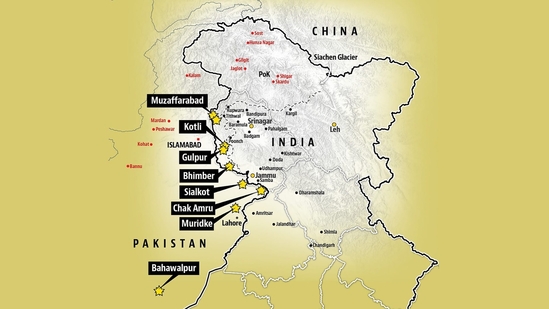
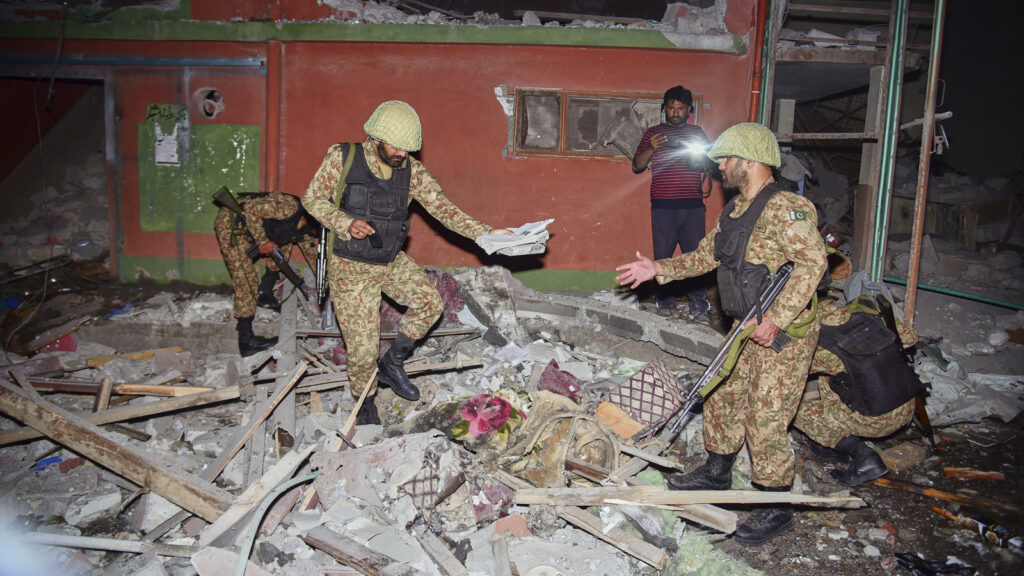
In the early hours of May 7, the Indian Air Force (IAF) executed 24 precision airstrikes using Rafale fighter jets armed with SCALP cruise missiles and AASM Hammer bombs. The targets—located in Bahawalpur, Muzaffarabad, Muridke, and Kotli—were reportedly hubs of terror groups Jaish-e-Mohammed (JeM) and Lashkar-e-Taiba (LeT).
“The operation was executed in under 23 minutes,” said Wing Commander Vyomika Singh of the IAF. “All aircraft returned safely to base.”
Though the strikes were air-dominant, the Indian Navy played a strategic role by deploying INS Vikrant, India’s indigenously built aircraft carrier, to the Arabian Sea. The move came amid intelligence of an impending Pakistani missile test and served to bolster India’s maritime security posture.
“The Navy’s role was preventive, ensuring the western seaboard remained secure and impenetrable,” said Rear Admiral R.K. Nambiar in the joint briefing.
Mixed Responses and Rising Tensions
India claims the operation neutralized over 70 militants and dismantled multiple launch pads and training camps. Pakistan, however, accused India of targeting civilian areas and claimed to have downed five Indian aircraft—a claim New Delhi has categorically denied.
In response to the strikes, Pakistan placed its air defenses on high alert and warned of “consequences,” raising fears of further escalation between the two nuclear-armed neighbors.
Meanwhile, the international community has urged restraint. The United Nations and key world powers, including the United States and France, have called on both sides to de-escalate tensions and resume dialogue.
Media Briefing by Female Officers
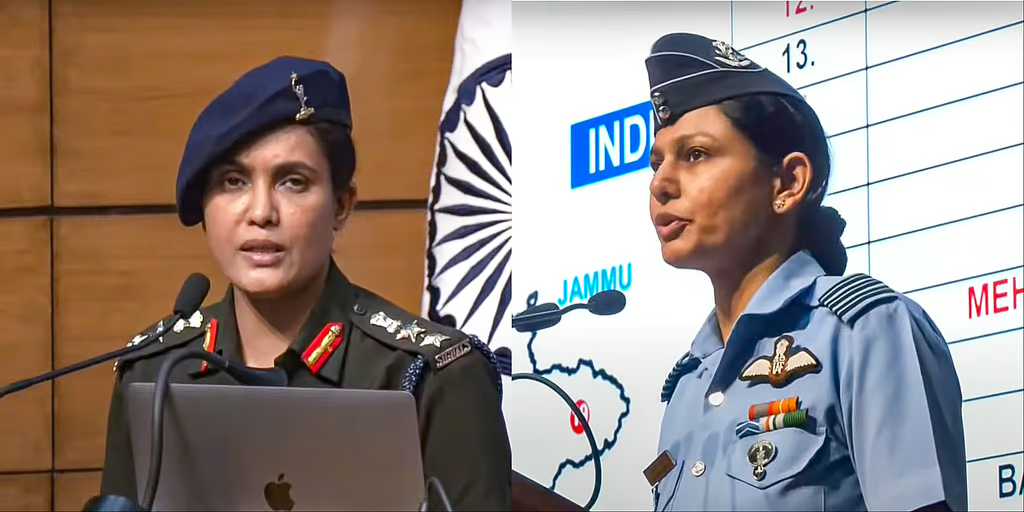
At the joint press conference held in New Delhi, Colonel Sophia Qureshi of the Indian Army and Wing Commander Vyomika Singh of the Indian Air Force provided detailed insights into Operation Sindoor.
Colonel Qureshi stated, “Nine terrorist camps were targeted and destroyed. These camps are located in Pakistan and Pakistan-occupied Kashmir.”
Wing Commander Singh emphasized India’s commitment to minimizing civilian harm, saying, “India has shown considerable restraint in its strikes overnight,” and reiterated that the strikes were aimed at “terrorist infrastructure” to avoid civilian casualties. Both officers underscored the precision and planning involved in the operation, reflecting India’s stance on counter-terrorism and its efforts to maintain regional stability.
Their Role in Operation Sindoor
Colonel Sophia Qureshi played a key role in strategic coordination and intelligence oversight for the Army during Operation Sindoor. Her experience in communications and counterinsurgency helped ensure seamless ground execution.
Wing Commander Vyomika Singh was actively involved in the operational planning of the IAF’s airstrikes. She contributed to mission strategy and targeting, helping ensure precision and minimal collateral damage.
Their involvement reflects the growing leadership of women in India’s frontline defense operations.
Symbolism and Message
Defense analysts believe Operation Sindoor sends a strong geopolitical message. “This is India telling the world that state-backed terrorism will not be tolerated, and emotional wounds, like the one inflicted in Pahalgam, will be answered with resolve,” said Lt. Gen. (Retd.) H.S. Panag.
With its air, land, and maritime wings synchronized, Operation Sindoor marks a rare tri-service military retaliation—a reflection of both India’s rising defense capability and its hardened counter-terrorism stance.