In the immediate aftermath of India’s retaliatory strikes, extremely conflicting narratives started brewing.
India asserted that it targeted only terrorist infrastructure, including the elimination of the globally recognised terrorist leader of Jaish-e-Mohammad, Abdul Rauf Azhar. Pakistan denied not only this claim but also that it even attracted India in the first place. Not only did they call the terror attack a ‘false flag operation’, they also accused India of initiating aggression and killing civilians- the opposite of what happened.
The divergence in accounts was further complicated by the rapid spread of misinformation on social media platforms. Deepfake videos, manipulated images, and even images of old conflicts were shared by the Pakistan Media and social media dwellers, making it challenging for both the public and even international observers to discern fact from fiction.
The most notable example demonstrating ‘fog of war’ is when, following Operation Sindoor, Pakistan claimed to have shot down five Indian fighter jets and three Rafales. However, the Indian Air Force did not confirm any such losses. The Press Information Bureau of India debunked these claims, labelling them as false and part of a broader misinterpretation campaign by Pakistan. Additionally, the IAF sources have confirmed that no pilots were lost during this operation, further casting doubt on Pakistan’s assertions.
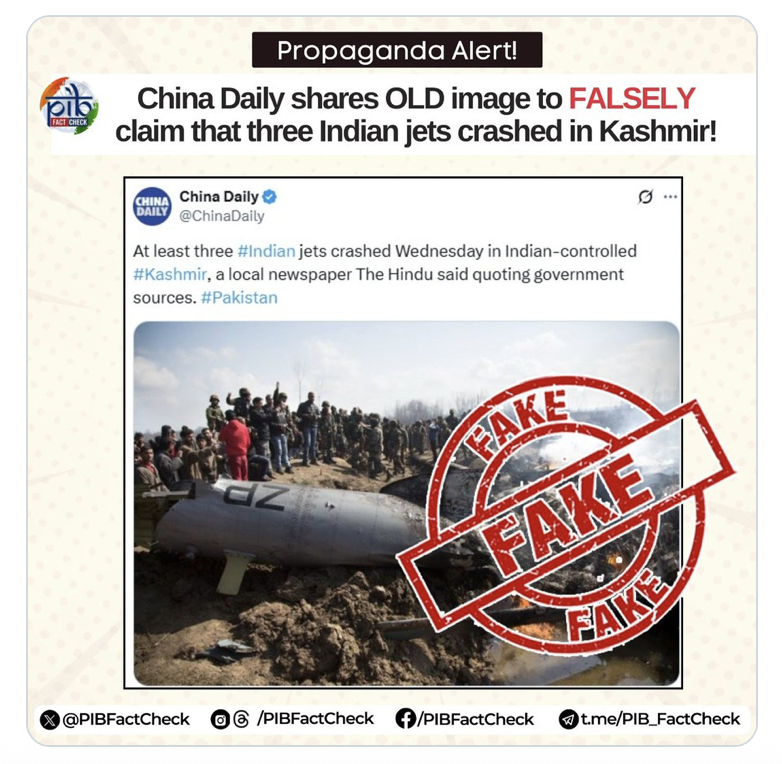

What makes this even more solid ‘fog of war’ piece is that the Pakistan Defence Minister himself wasn’t able to provide proof of the claims to international media on CNN and Sky News when they gave him a chance to prove to the world that the information they peddled is not a lie. It turned out to be a lie.
Multiple other instances of people sharing false pictures from Gaza and other countries, and a lot of anti-government elements believing it and pushing it forward within India itself, created a sense of sorrow and confusion amongst the worried public, now and then. This is how we understand what we mean when we say we’re in a ‘fog of war’.
These discrepancies also show us the challenges that everyone faces at the hands of the fog of war, where misinformation and propaganda can obscure the truth. In this context, Pakistan’s unsubstantiated claims appear to be an attempt to shape the narrative in its favor, despite lacking corroborative evidence.
Historical Examples of Fog of War
Consequences of the fog of war in past conflicts:
- Iran Air Flight 655 (1988): The U.S. Navy mistakenly shot down an Iranian civilian airliner, killing all 290 passengers, due to misidentification amid a chaotic combat environment.
- Ukraine International Airlines Flight 752 (2020): Iranian military forces shot down a Ukrainian passenger plane, resulting in 176 fatalities, during heightened tensions with the U.S..
- Battle of Inkerman (1854): During the Crimean War, dense fog led to confusion among British and French forces, resulting in disorganised combat and missed opportunities.
These are examples of the fog of war leading to devastating results. During Operation Sindoor as well, experts continuously suggested that the back and forth had been so intense that even the slightest misinterpretation could have led to an all-out war.
This is the importance and the power of the fog of war when one falls into it. Hence, it is better to always stick to government sources, not desperately seek updates from unverified media houses. We can also see the major role journalism can play in triggering more unrest, or being responsible and providing support to the government and military forces.