In a significant turning point for the world—and for India—we have surpassed Germany to take third place in the world in terms of electricity generation from solar and wind power. This puts India right behind only China and the United States, marking a new chapter in the clean energy journey.
The news is significant and comes from the 2025 Global Electricity Review by the international energy think tank Ember. Why? Because this is about powering the future in a sustainable way, not just about electricity.
India’s solar energy growth has been nothing short of remarkable. We increased our solar capacity by 24 gigawatts in 2024 alone, which is more than twice as much as we added the year before. Solar energy now powers 7% of the electricity we use, and that number has doubled since 2021.
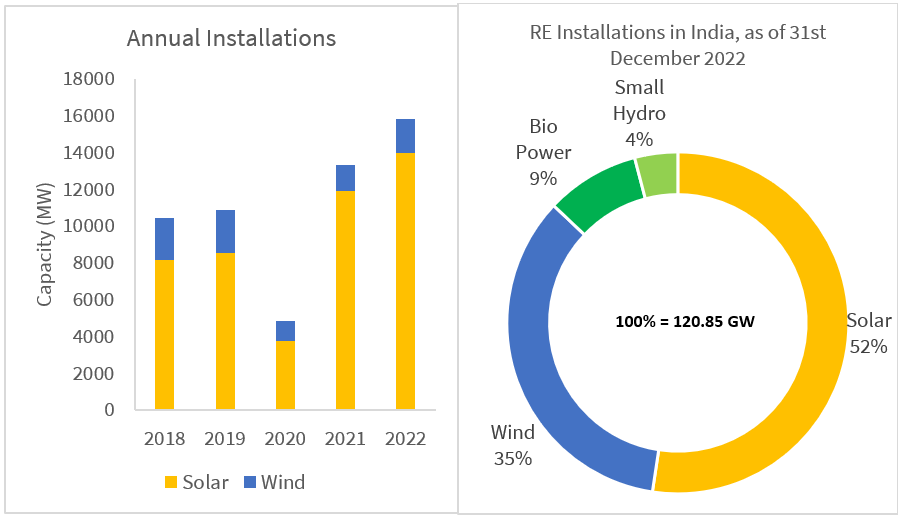
Note: Solar capacity includes utility scale solar, rooftop solar, and off-grid/ distributed solar capacity
In 2024, 10% of India’s electricity was generated by solar and wind combined. You can see that cleaner energy is happening now rather than as a goal for the future when you include hydropower, which contributed an additional 8%.
Things are also changing quickly on a global scale. For the first time since the 1940s, over 40% of the world’s electricity came from low-carbon sources, like wind, solar, and nuclear power. What about solar? For the twentieth consecutive year, it was the power source with the fastest rate of growth in the world. Globally, solar electricity has doubled in just three years. Phil MacDonald, Managing Director at Ember, stated that “solar power has become the engine of the global energy transition.” It’s the wise choice now, not just the clean one.
However, being green isn’t the only thing to consider. More stable electricity supplies, less reliance on fossil fuels, increased energy security, and new jobs are all benefits of a cleaner energy mix that impact our daily lives. India is at the forefront of Asia’s clean energy transition, according to Aditya Lolla, director of Ember’s Asia Programme.
Of course, there are still difficulties. We will need to continue expanding clean sources as our energy needs increase, and more investment is required to meet our goals. By 2030, India wants to have 50% of its installed electricity capacity come from non-fossil fuels. Though ambitious, it is feasible.
India has earned the moniker “Solar Superpower” from UN climate chief Simon Stiell with this most recent accomplishment. The world is watching as India’s solar-powered story unfolds, from rooftops to massive solar farms, from tiny towns to megacities.
Are we prepared to move forward? The answer may be yes as long as the sun continues to shine.