Some stories aren’t set in ink, but are remembered in the fabric that crossed oceans- traded, treasured, and never forgotten.
Long before the global fashion weeks, Indian textiles walked the world, known for their fine quality and craftsmanship. For centuries, these handmade textiles have served as the cultural identity of India and its artists, even contributing to the freedom movement. From silk production in Varanasi to Muslin woven in Dhaka, India was the prime exporter of textiles, owing to its well-established global trade routes.
Indian textiles have always been the symbol of expression for our rich heritage, and their export around the world has only strengthened their position as a global leader, surviving even the phases of colonization and rapid industrialization. The history of Indian textiles and trade routes dates back as far as 6000 years, but the impact Ancient India had on Global textile trade remains prevalent and prominent even today.

Evolution Of Textile Trade Through History
The Ancient Period
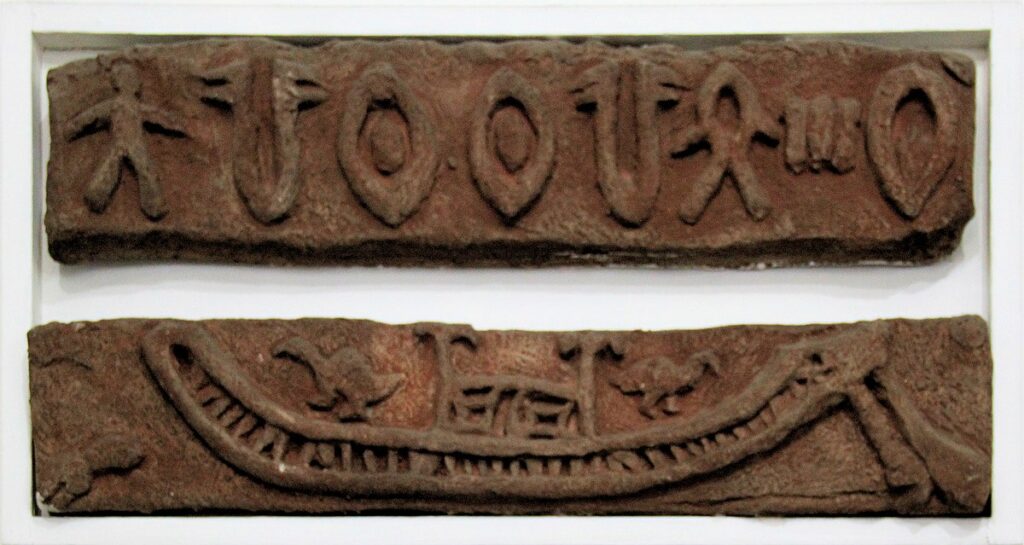
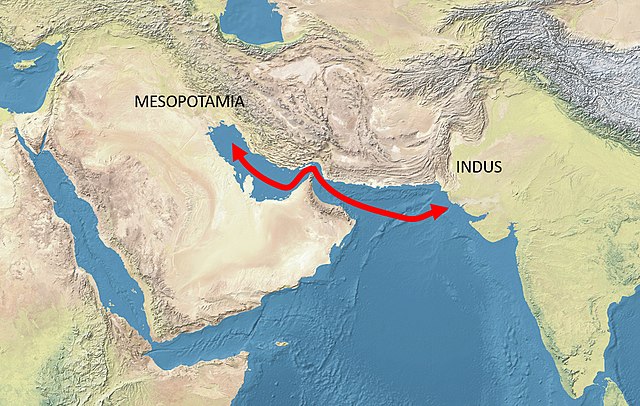
The story of Indian textiles extends back to the Ancient Period when India was reputed as a commercial centre. The very first evidence of Indian trade was found in the Indus Valley Civilisation (2600-1900 BCE). The Harappan sailors developed links with Oman, Bahrain, and other places in West Asia. Even the dockyard found in Gujarat’s Lothal offers solid proof of sea trade.

In addition, the evidence of sea trade was found in the South Indian Dynasties of Pallavas, Chalukyas, and Cholas. South India came to be known for its high-quality silk as the city of Kanchipuram became a major centre for indigenous silk production. Muslin, on the other hand, was traded from the ports of Bharukachchha (Bharuch, Gujarat) and Barbaricum (now a part of Pakistan).
Wool was also an important trade textile at that time, coming largely from the regions of Kashmir. For cotton textiles, the trading centers were many, including Mathura, Kasi, Konkan, Kalinga (Odisha), Bengal, Kaushambi, and Mahishmati (Madhya Pradesh)
The Mauryan Period was also marked by a trading system through both land and sea, as evidenced in the Arthashastra of Kautilya, which mentions the rules and regulations on trade activities of that period. During this time, the woollen textiles were supplied by Nepal, linen from Kasi, and silk came from Bengal and Suvarnakudya (now, Assam).
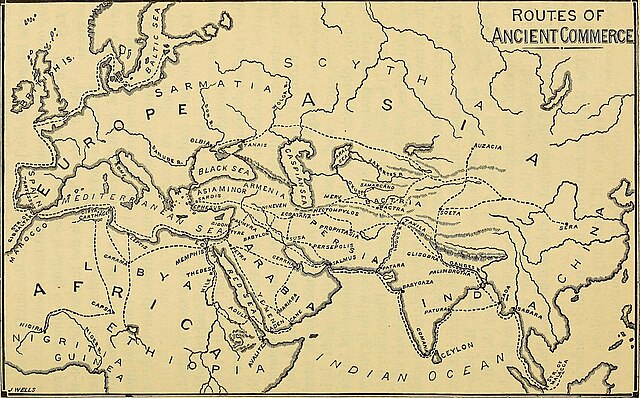
Ancient Indian textiles outgrew the regional demand and became a global phenomenon that travelled afar through well-renowned trade routes, both land and sea routes. The land route was known as the Silk Road, connecting the Middle East and Asia to the Western world, thus connecting India with China, Central Asia, and Europe. The Indian Ocean Trade Route connected the coasts of Southeast Asia, India, Arabia, and East Africa(China) through sea routes.
The Medieval Period
The Indian Ocean remained a major sea route for all commercial activities, including textiles, during this time. Medieval India was considered the largest textile producer, trading through the Arabian Sea and the Bay of Bengal. The most important Trade centres included Surat, Bengal, and Masulipatam. The prominent textiles included cotton, muslin, chintz, and silk.
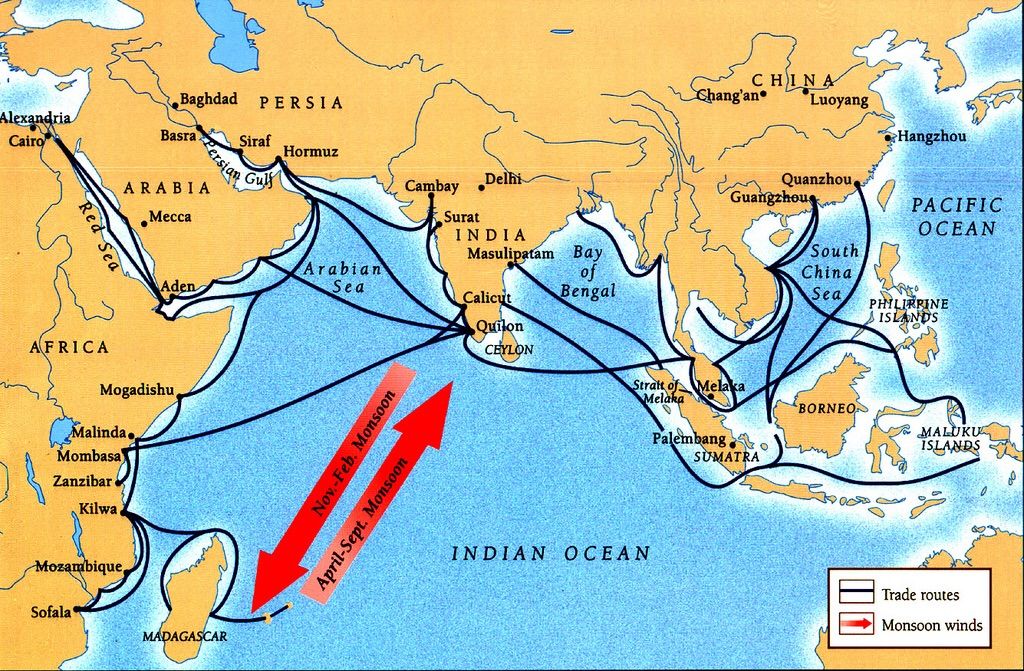
In the early 16th century, the port of Surat in Gujarat was a major Trade centre connecting India to the Red Sea and Persian Gulf. The port was also internally connected to Masulipatnam and Bengal. Chief textiles included cotton, silk, baftas, chintz, cangans, and calicoes (variations of coarse cotton), and zarbaft ( fabric with gold brocade). Even techniques like Ikat pattern, Patola, and bandhani have travelled globally.
Masulipatam in Andhra Pradesh is one of the most important trade ports in Indian textile history. In the late medieval period, the centre experienced increased trade from Golconda, European and Persian traders, and Komatis. The Coromandel coast specialized in chintz(printed cotton fabrics) produced in the Golconda region, and became well known as the ‘chintz of Masulipatam’. Transported to France and England, the high-quality Chintz fabric was appreciated by both Europeans and the Mughals during that time. Ultimately, the Mughals took control over the Golconda region, and popularity declined.
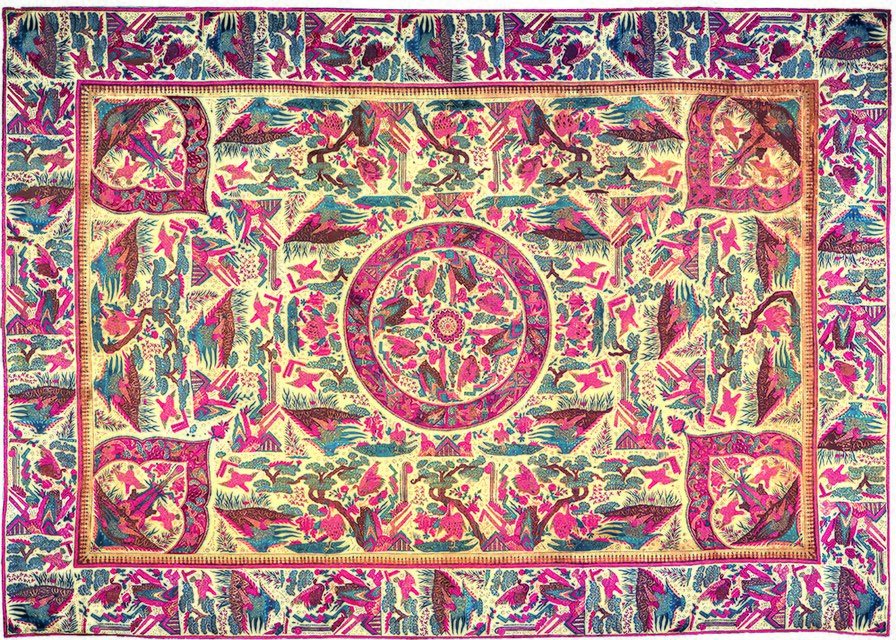
In the late 16th century, Bengal also started exporting textiles, with Chittagong, Sonargaon, and Bakla becoming major manufacturing centres for cotton textiles. Muslin, especially from Dhaka, was very popular due to its superior quality, and Bengal Muslin was traded to the Middle East, China, and Thailand. Awadh also emerged as a prominent place for trade, as goods were transported through Agra to the port of Surat and then off to abroad.
Till the 17th century, Gujarat and the Coromandel coast were accepted as the most important trading centres.
The Colonial Period
Vasco da Gama discovered a new sea route from Europe to India in the late fifteenth century. Following this, many European traders visited India and were fascinated by the high quality and quantity of silk and cotton textiles produced here. In 1608, the British East India Company set foot in India and began trading spices, cotton, and silk.
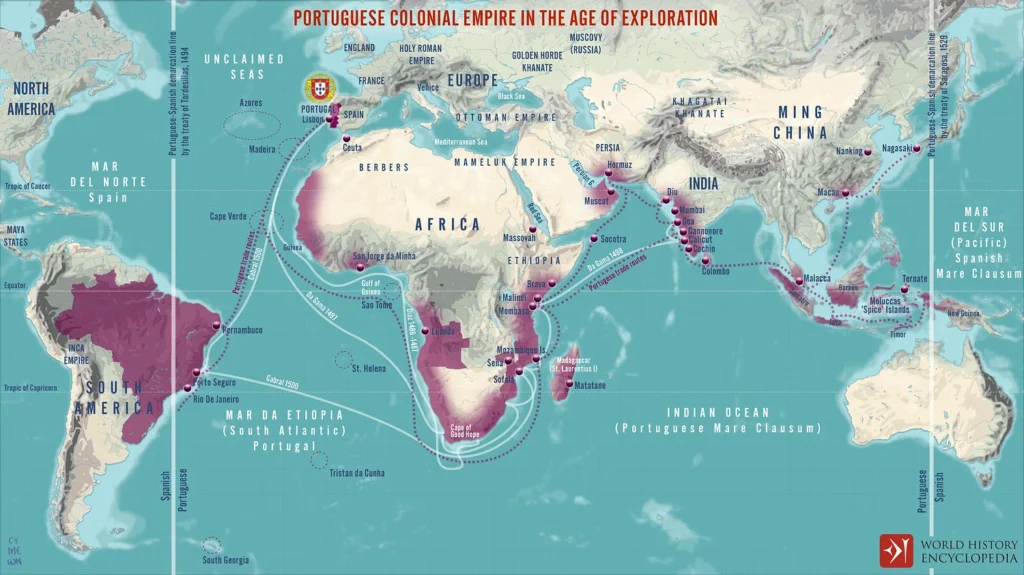
The port of Surat in Gujarat, Masulipatam on the Coromandel coast, and Hooghly in Bengal remained prominent trade centres during this period as well.
The chintz fabric from India became commercial in European countries, including England, because of its rich quality and affordability. To the extent that the British East India Company in 1730 ordered ninety-eight varieties of cotton and silk products, which amounted to five lakhs and eighty-nine pieces of clothes. Following this, the British government introduced the ‘Calico Act’ in 1721, banning the use of chintz fabric in England.
Indian textile markets were flooded with Portuguese, British, French, and Dutch buyers. During the 1730s, the first textile industry in England was established, which produced knock-off Indian designs on muslin imported from India. The well-established trading ports of Surat and Hooghly were shrinking, while Bombay and Calcutta were emerging. This was a result of colonial rule in India, as the British started to control the Indian trade. Soon after the Industrial Revolution in the 1760s, England became a leading nation in the world, and the control of the British East India Company increased.
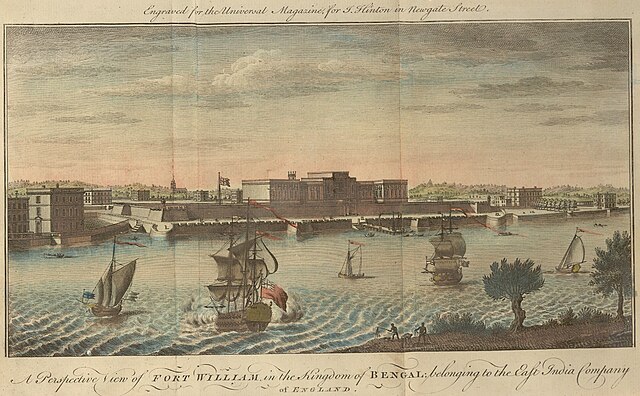
Indian textile continued to be in great demand even after this, leading to the termination of the Calico Act in 1774. But, gradually, the British textiles started competing with the Indian textiles and took over European markets. England used modern, cheaper, and quicker-to-produce textile machines. India was solely narrowed down as a supplier of raw cotton for England.
This led to a great loss for the Indian textile trade and resulted in unemployment across the country in the early 19th century. The British established cotton yarn manufacturing industries in India during the 1810s, and set up the first cotton mill in Calcutta- Fort Gloster Mill. The Indian textile markets are flooded with cotton clothes made in England. There was extreme exploitation of Indian resources during colonial Times.
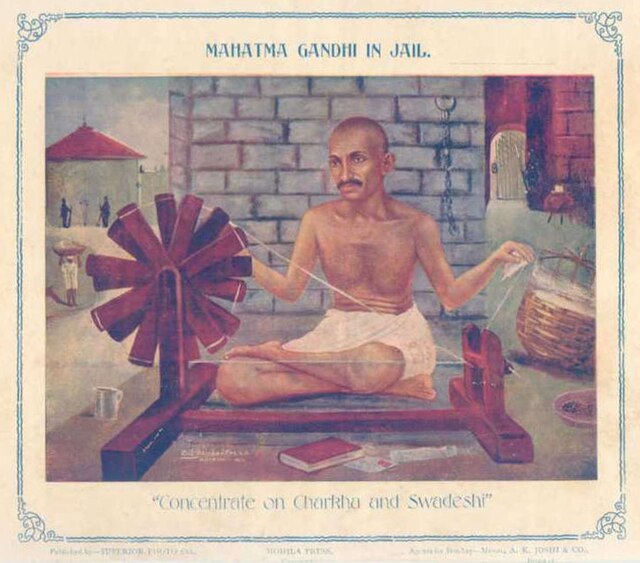
But the early 20th century became a turning point for Indian textiles. The ‘Swadeshi’ movement motivated Indians with nationalism to boycott foreign clothes. This acted as a powerful way to protest during the freedom movement. Additionally, Mahatma Gandhi’s charkha (spinning wheel) to spun khadi, was instrumental in encouraging more people.
As a result, the cotton clothes production in India increased rapidly between 1900 and 1912. The Indian textile industry established trade links with Persia, Turkey, Africa, and Ceylon, and even contributed to the war with suitable clothing during World War 1.
The Post-Colonial Period
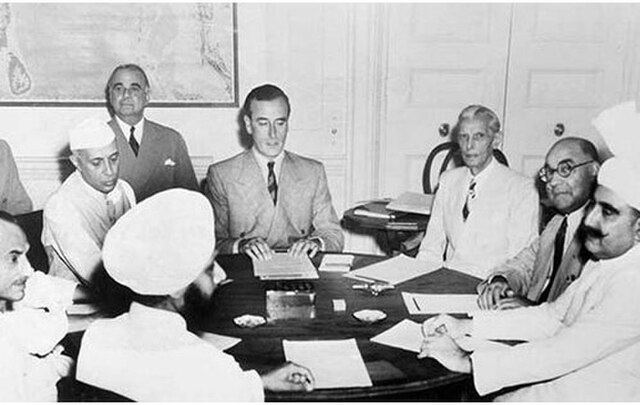
The post-colonial or pre-independence period served as another turning point for the textile industry in India. Due to the partition, the regions where raw material was grown were separated from the areas in which factories were set up. Most of the jute and cotton were grown in the area now in East and West Pakistan. While the Mills and factories remained within Indian borders. After the partition of 1947, India had to import raw cotton fibres at a high price. Additionally, the domestic market fell apart, with falling production of cotton, one of the major textiles.
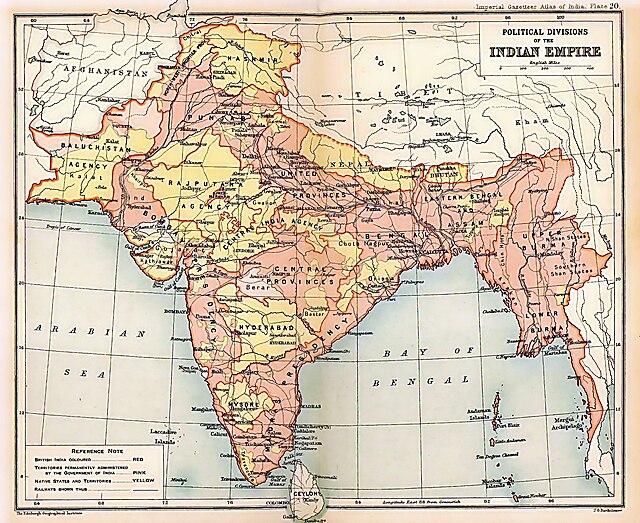
The Indian government had to initiate extra measures to take care of such fallen industries and introduced the Nehruvian Economic System. According to the policy, 18 industries were declared of national interest in 1948, including the textile industry as one of them. Following this, in 1951, under the Industries Act, the textile industry came under government protection.
The government took active initiatives, and the cotton cultivation significantly increased from 1951 to 1977, with more focus on irrigation facilities rather than dependency on monsoon rains. The production facilities were also improved with the introduction of ‘composite mills’ (both spinning and weaving) and a shift from handlooms to power looms. In the 1990s, India came in third place in the production of raw cotton after China and the US.
The Contemporary Period
Currently, the Indian textile industry is a leading force in the growing market globally, with plenty of raw material, skilled labour, and competitive industry costs. India today ranks as the second largest producer of textiles and garments and the second largest manufacturer of PPE(Personal Protective Equipment). India currently has the 5th largest technical textile market, and Indian technical textile is expected to grow rapidly on a global scale. In terms of export, India ranks as the third-largest exporter of textiles and apparel globally.
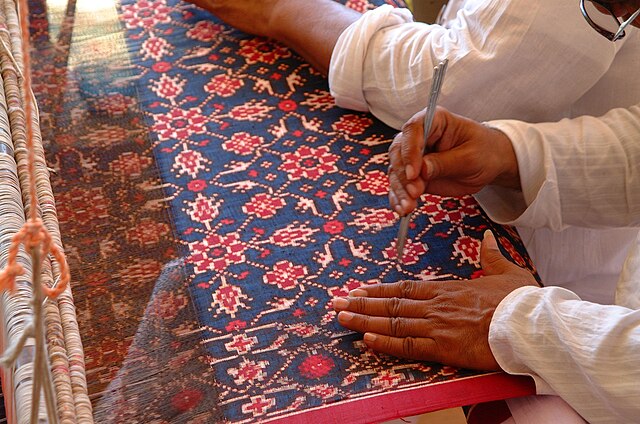
India is the largest producer of jute and the second largest producer of cotton and silk. India is known to be the only country that produces all five types of silk- Mulberry, Eri, Muga, tropical tussar, and temperate tussar; and all four kinds of cotton- G. Arboreum & G. Herbaceum (Asian cotton), G. Barbadense (Egyptian cotton), and G. Hirsutum (American Upland cotton).
The textile sector is among the oldest and most significant parts of the Indian economy. Following agriculture, textile exports from India serve as a key source of revenue for the country. Despite various trade restrictions, India still leads as an important player in the textile and apparel trade globally.