
An alarming report by the Association for Democratic Reforms (ADR) released on April 30, 2025, has revealed that nearly one-third of India’s sitting women MPs and MLAs face criminal charges, while many possess enormous wealth. The ADR analysed affidavits of 512 women representatives, consisting of 112 MPs and 400 MLAs, which highlights a concerning trend of criminalisation, wealth disparity, and educational qualifications of elected female leaders across India.
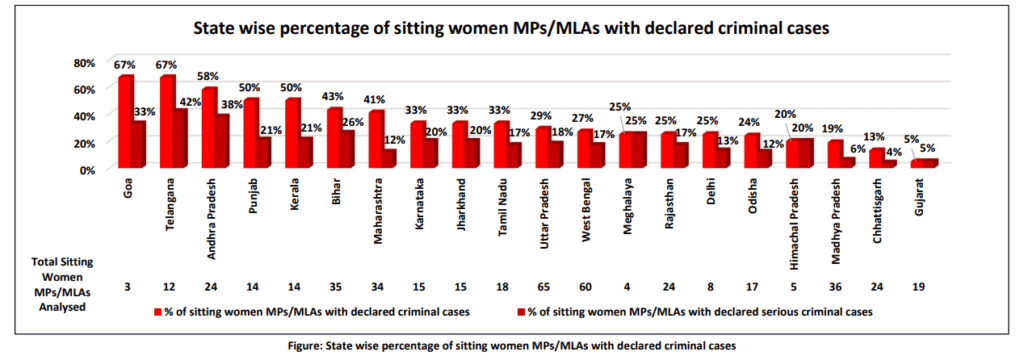
28% of women representatives have declared criminal cases against themselves. Even more disturbing is that 15% are caught up in serious crimes, including murder, attempted murder, corruption, and offences against women and children. Andhra Pradesh’s MLA Akhila Priya Bhuma of the TDP tops this unsettling list, with charges including murder and attempted murder. States like Telangana, Goa, and Andhra Pradesh have emerged as hotspots, where over half of the women legislators face criminal allegations.
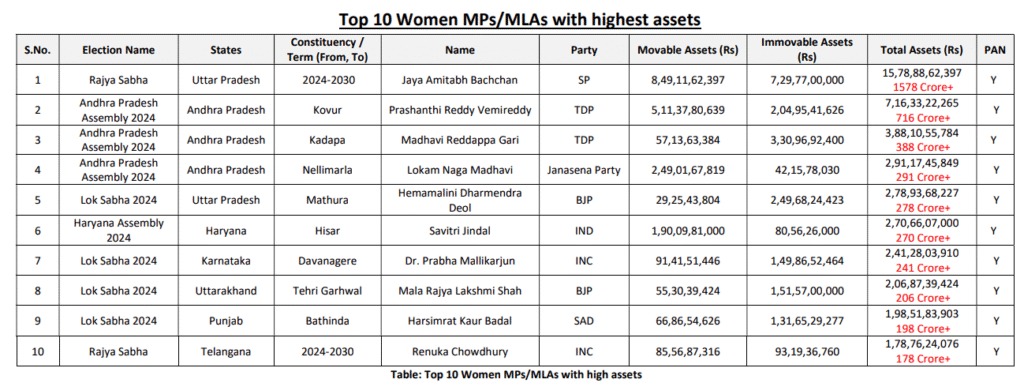
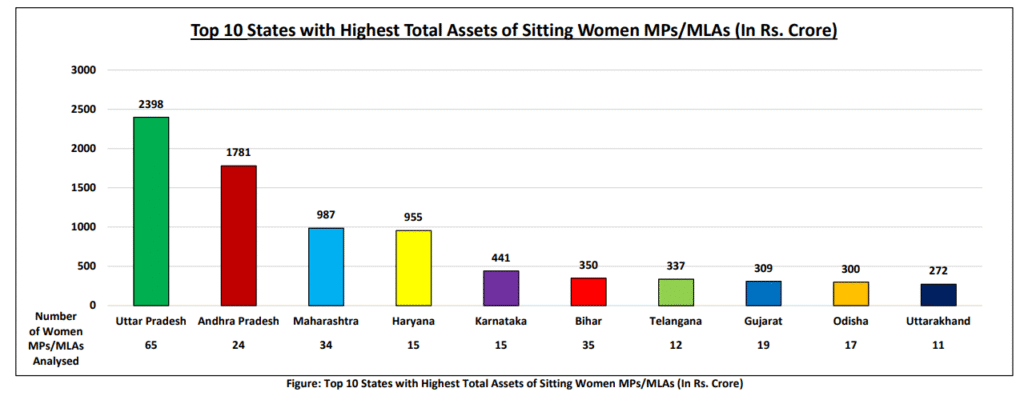
The financial analysis section of the report paints an equally troubling picture. The combined wealth of these women legislators stood at Rs 10,417 crores, averaging Rs 20.34 crores each. Of these representatives, 17 are billionaires. Topping the wealth list is Uttar Pradesh’s Rajya Sabha MP, Jaya Amitabh Bachchan, possessing assets worth Rs 1,578 crores, followed by Andhra Pradesh’s Prashanthi Reddy Vemireddy with Rs 716 crores. Andhra Pradesh notably ranks highest for average legislator assets (Rs 74 crores), trailed by Haryana and Maharashtra. This concentration of wealth among representatives raises critical questions about economic disparity within India’s political system, with the average indian citizen bringing in only a few lakhs yearly..
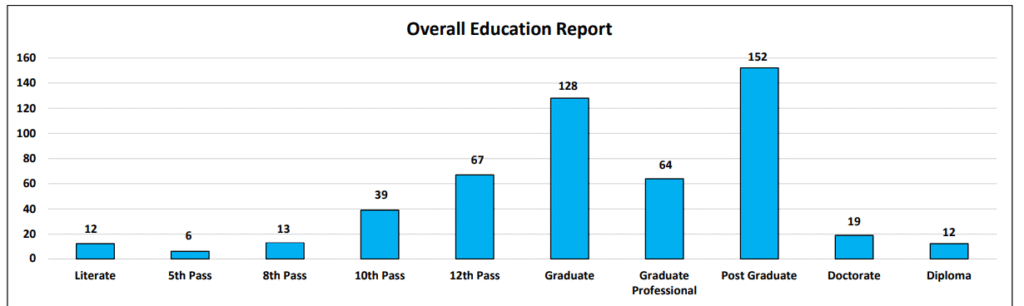
Education-wise, the profile of India’s women legislators shows considerable variety. While a promising 71% have completed at least one graduate degree, nearly 30% hold a postgraduate qualification. Almost a quarter (24%) have limited education between the 5th and 12th standards. This uneven distribution highlights the continuing education gaps among political representatives.
Age demographics also reflect interesting dynamics: although India’s average citizen age is below 30 years, the average age of women MPs and MLAs stands at 49. Interestingly, youth representation (aged 25-40) among women is relatively higher at 22%, compared to just 10% among male representatives, suggesting that younger women are gradually breaking political barriers.
The political affiliations of these representatives further complicate the narrative. While the BJP leads in the sheer number of female legislators, it is parties like TDP, AAP, and RJD that present higher percentages of members with criminal charges. On the other hand, the Samajwadi Party (SP) and TDP stand out as parties with significant average wealth per legislator, indicating how financial strength varies dramatically across party lines.
This comprehensive report by ADR aims to provide voters a critical lens through which they can assess those entrusted with legislative authority. As India continues to advocate greater women’s political participation, these findings serve as a stark reminder of the urgent need for deeper introspection, reform, and accountability within the country’s democratic systems.
Furthermore, to address issues, ADR offered detailed recommendations on improving the participation of women in politics. The foremost being merit-based selection rather than banking votes through financial power or family connections. They also stressed on selection of women candidates who are not easily manipulated by their male counterparts, thus to avoid tokenism. Continuous training and mentorship are key to filling the educational and skill-based gaps that exist. Fair education opportunities are also a must to promote women to inculcate their socio-political ideologies.