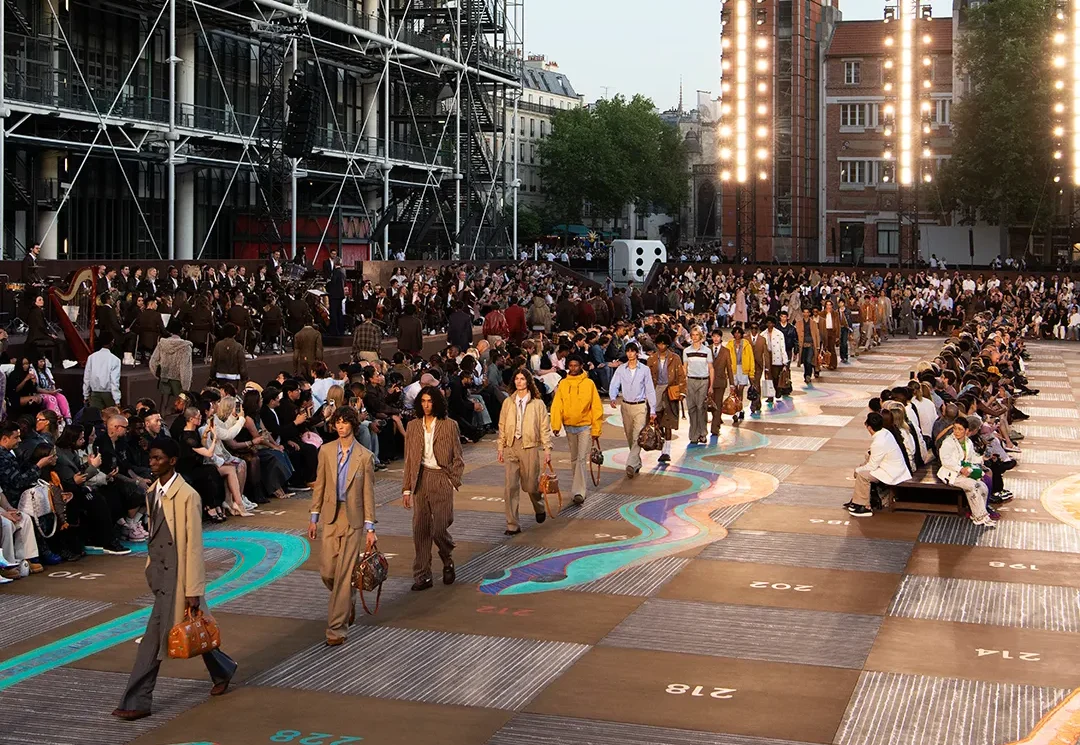
A Cosmic Game Board, An Indian Soul, When India’s visionary architect Bijoy Jain stepped into Paris’s Centre Pompidou courtyard, he didn’t merely design a runway he reimagined the city’s piazza as a sprawling, elemental mandala inspired by the ancient Indian game Snakes and Ladders, known historically as Moksha Patam.
At 2,700 m², this human-scale board wasn’t just decor it was philosophy underfoot. Five luminous serpents in turquoise, green, amber, and clay‐red twist across earthen boards, carved in wood and coated in raw clay pigments, acting as living veins of chance, fall, elevation, and redemption. For Jain, the snakes represent pitfalls, the ladders promise ascent together forming a cosmic diagram, guiding steps, decisions, fortunes.
Architect’s Artistic Alchemy
Jain’s Studio Mumbai is famed for minimalist, tactile work rooted in Indian craftsmanship and elemental materials. Here’s how he transformed philosophy into spectacle:
- Material Truth: Wood, lime, clay pigment no glitter, no artifice just honest earthiness beneath city lights.
- Hand‑drawn Details: Five serpents crafted from lime and gesso with raw pigments each stroke deliberate, each snake a visual narrative .
- Cosmic Mandala Layout: The board is a game but also a mandala, a spiritual portal and walking across it becomes a human. ritual.
- Collaborative Spirit: Collaborated intimately with Pharrell Williams ensuring the set was both stage and story, space and spirit.
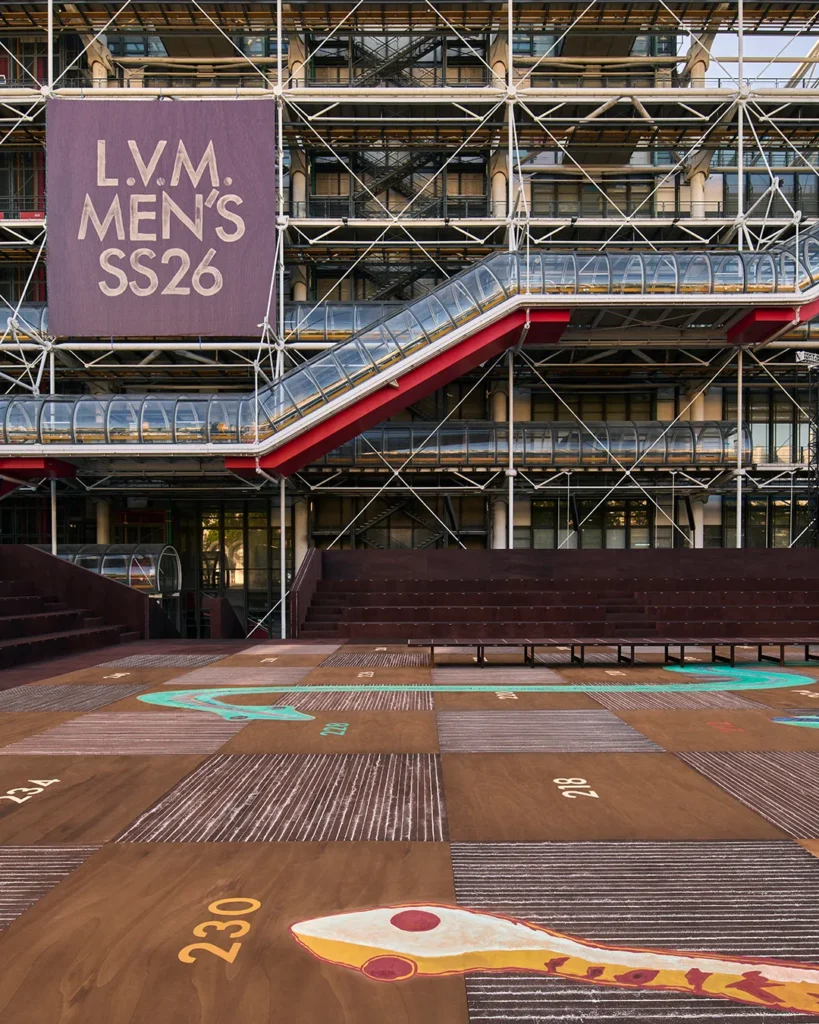
Pharrell’s Perspective: A Game of Life
Pharrell praised Jain’s artistry, calling the board a “living game” more than a versatile stage, it was a spiritual ecosystem pulsating with life, energy, and narrative intent. A fitting homage to India not a theme, but the creative engine, shaping music, motifs, and movement.
The music? A Punjabi‑Indian hybrid track designed with A.R. Rahman, echoing the serpent’s coils in rhythm. The trunks and accessories featured pan‑Asian motifs elephants, palm trees, crystal encrusted secrets that whispered of Mumbai bazaars and Jaipur courts.
India Takes Center Stage on the Global Runway
This was more than a set it was a full‑throated celebration of Indian talent and narrative. Bijoy Jain joins the pantheon of international architects for Vuitton think Gehry, Zaha Hadid confirming that Indian engineering and aesthetics can shape global fashion’s most daring moments.
Designers, creatives, and diasporic audiences alike are cheering this wasn’t tokenism it was authentic storytelling. As Vogue Arabia puts it, this was travel as philosophy, a rooted yet fluid dialogue between place and possibility
Why It Matters: Art, Identity, Impact
This isn’t just show business it’s cultural architecture:
- Storytelling Through Space: Drawing guests into a journey, not just a show models, spectators, VIPs stepped onto the board and into India’s narrative.
- Creative Fusion: Architecture, music, fashion, craft melded into a 360‑degree sensory canvas.
- Soft‑Power & Representation: Indian architects and artisans are redefining luxury world’s aesthetics and telling global audiences that our stories matter.
What’s Next: India’s Global Ascent
As Jain’s serpentine stage dazzles under Pompidou lights, this moment reframes India on the world’s creative map. It isn’t a one‑off; it’s a statement: India’s design DNA ancient, spiritual, skilled is ready for its spotlight.
What Bijoy Jain built at Vuitton wasn’t a runway it was a philosophical playing field, where art, chance, ascent, and culture converge. It showed the world that Indian talent doesn’t just contribute it leads. After all, the ladder up truths begins with stepping off the board and owning your story.