


Music, is there any proper definition? If I had to explain it, then it would be something like a rhythm full of magic which makes one feel alive, happy and calm. Music is like a medicine based on situations; it becomes the perfect treatment, be it for a heartbreak or an achievement. The charm of music is always there, like a true and loyal companion.
Therefore I thought, perhaps it was my curiosity to know how did such magic came to be in its existence- I mean there are no enough appreciation of music, the healing properties that it has blessed us with – and how it has played many parts to suit itself in every situation out there, for instance during Wars – it played the part of rebellion, refuge, and liberty, In disasters it became hope, connection and power and in Achievements it became the winning anthem. This article will take you on a journey to understand the origins of music and its current aspects.

Evolution of music:
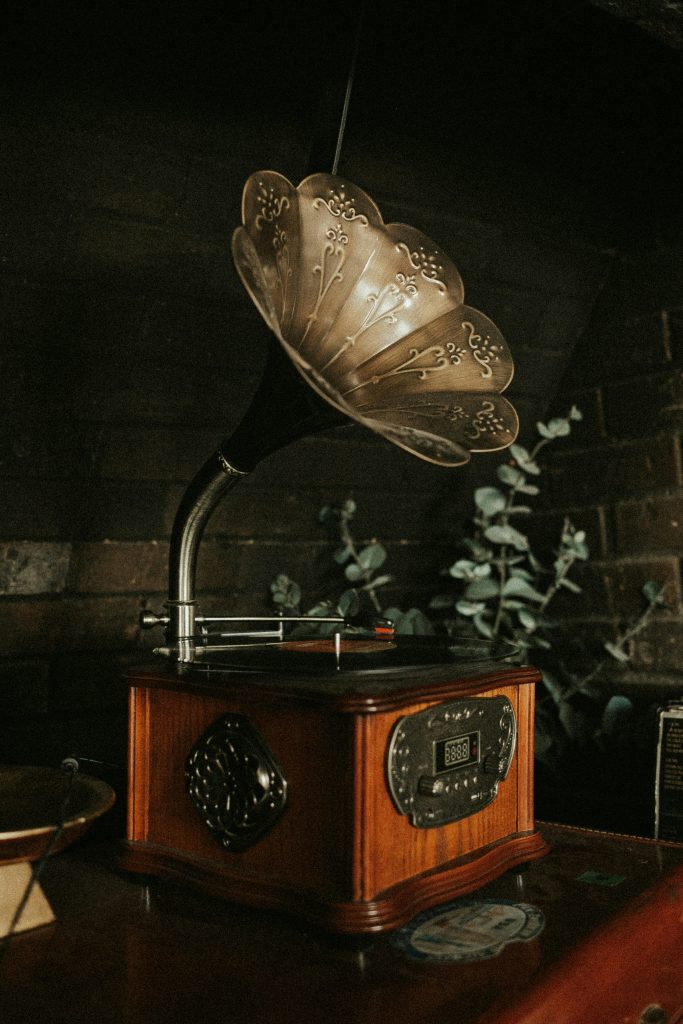
It all began with Edison’s phonograph in 1877, which recorded sounds onto tinfoil cylinders and played them back via a hand crank and acoustic horn. Although the sound quality produced was poor and playback was limited to one use, it defined the very first way of capturing sound for preservation and succeeding that came the innovators like Emile Berliner, who refined the concept and invented the “gramophone” in 1887, which used flat, grooved discs instead of cylinders. By around 1895, mass-produced gramophone record players flourished in the music industry and also gave the opportunity to be brought into homes, which gave it a brand-new identity.


Fast-forward to 1948, the advent of vinyl records (LPs at 33⅓ RPM and singles at 45 RPM) offered longer playback times and better affordability, especially after the war. By the 1960s and 1970s, stereo turntables delivered high-fidelity sound that people could truly enjoy and love. While vinyl became legendary, the radio, especially portable transistor models, provided an easier alternative.
By the 1950s, radio stations began focusing on music playlists (“Top 40” programming), and by the 1960s and ’70s, transistor radios made portable listening widespread. Then came the compact disc (CD) era in the early 1980s. CDs offered digital clarity, durability, and the ability to skip tracks—revolutionising home listening—and by 1982, the first commercial CD was released.
As CDs rose in popularity, the latter 20th century saw the emergence of Digital Audio Workstations (DAWs)—tools that empowered musicians with digital recording, editing, and production right on their computers—unlocking new creative freedom. Finally, the streaming era arrived. With the spread of the internet, MP3s and digital stores such as iTunes changed how people purchased music. By the mid-2000s, streaming services like Spotify, Apple Music, and YouTube became dominant, offering vast libraries accessible instantly, with accessibility and efficiency reshaping the music industry business model.
Music and People:
Music has always been a reflection of society, and the way it has evolved in India and the West shows how culture, technology, and audience choices have come together to shape sound. In India, the roots of music lie in classical traditions like Hindustani and Carnatic as well as countless regional folk styles. But from the mid-20th century onward, film music became the main channel through which people experienced songs. Playback singers and composers of Bollywood defined popular taste, and with the spread of gramophones, radio, and later cassettes and CDs, cinema music reached every corner of the country. By the 1990s, satellite TV and MTV India brought international pop into homes, resulting in fusion experiments.
In recent years, however, a quiet revolution has taken place: streaming platforms such as Gaana, Spotify and many more have empowered the independent artists to surpass the film industry and forge their own distinct identity. Genres like hip-hop, indie pop, and regional-language music are trending, with rappers like Raftar, Hanumankind and a growing Punjabi, Tamil, and Telugu presence shaping the Indian youth’s playlist. While Bollywood still holds the baton, the trend is shifting toward diversity and discovery, with streaming and social media as the new gatekeepers.
The Western story of music follows a different path. Jazz, blues, and gospel laid the foundations in the early 20th century, giving birth to rock ’n’ roll in the 1950s and shaping the global popularity of acts like Elvis Presley and The Beatles. By the 1970s and ’80s, disco, punk, heavy metal, and pop superstars such as Madonna and Michael Jackson defined new generations, while the 1990s and 2000s saw hip-hop and electronic music take centre stage. Technology transformed listening habits: first through CDs, then MP3 players and iTunes, and finally through streaming services like Spotify and Apple Music, which replaced ownership with instant access.
Today, Western music is marked by genre-blending, where rap, pop, EDM, and Afro-Latin influences merge seamlessly. TikTok and Instagram Reels have become one of the most powerful engines of discovery, with viral clips often propelling unknown tracks into global chart-toppers. Unlike the past, when the whole world rallied around a “song of the summer,” current listening is more fragmented, shaped by personalised playlists and algorithm-driven tastes.


Photo by Alexander Shatov on Unsplash
Alongside these developments, global flows of music show how interconnected soundscapes have become. South Korea’s K-pop, built on slick production and intense fandom culture, has reached audiences worldwide, while Nigeria’s Afrobeats and Puerto Rican reggaetón dominate international charts and even influence Western pop stars. This cross-pollination reflects how technology and cultural exchange are eliminating boundaries and coming together to form a global playlist where any listener from any part of the world might move from Arjit Singh to BTS to Nirvana in a single session.


