

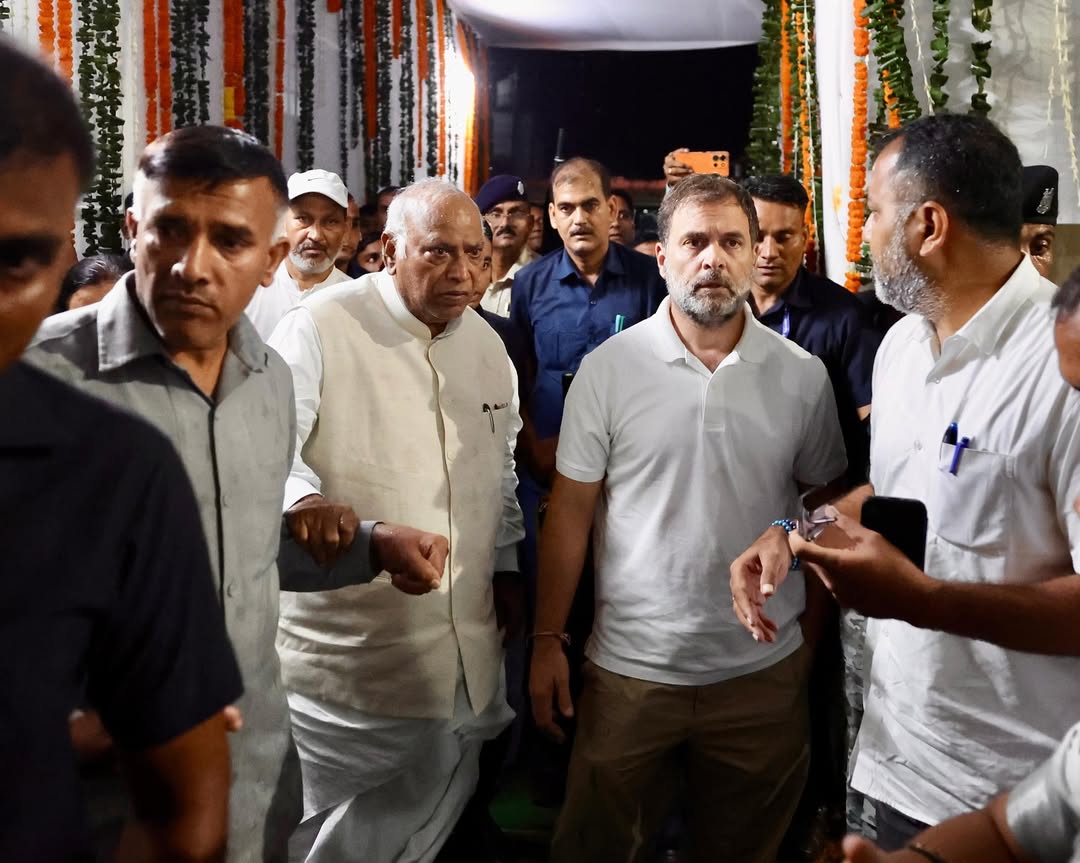
India’s Supreme Court has suspended trial proceedings against Rahul Gandhi in a defamation case involving his assertion that China has taken over 2,000 square kilometers of Indian land. The court questioned the rationale of Gandhi for making such a claim and suggested that such comments are more appropriately made in parliamentary debate and not in public rallies.
The defamation case was instituted by retired Border Roads Organisation (BRO) director Uday Shankar Srivastava, who alleged that Gandhi had defamed the Indian Army and communicated false information. The complaint arose out of Gandhi’s frequent remarks, first during the Bharat Jodo Yatra and later in Ladakh asserting that Chinese troops had occupied Indian territory and physically overrun Indian troops in Arunachal Pradesh.
On August 4, a bench of Justices Dipankar Datta and Augustine George Masih questioned the authenticity of Gandhi’s claim, inquiring:
“How do you know that China has occupied 2,000 square kilometers? Who told you this?”
The bench emphasized that such serious allegations without evidence would have national security implications and requested Gandhi to raise such concerns in Parliament instead of public media.
Although resident in the trial in front of a Lucknow court, the Supreme Court did not go so far as to quash the case, explicitly stating that freedom of speech is not equal to the right to defame.
The political repercussions were immediate. Congress leader Priyanka Gandhi Vadra took issue with the choice of words used by the Supreme Court, saying:
“Judges do not decide who is a true Indian… my brother never disrespected the Army.”
Congress also defended Rahul Gandhi’s remarks as part of his duty as the Leader of the Opposition. Party general secretary Jairam Ramesh claimed that Gandhi’s statement was based on inputs from former Army officers and residents of Ladakh. Ramesh further accused the BJP-led government of hiding the truth about Chinese incursions, alleging that at least 1,000 sq km of Indian land, including 900 sq km in Depsang Plains, remains inaccessible to Indian patrols since 2020.
Simultaneously, the BJP refuted the claims as untrue and detrimental to India’s global reputation. Union Minister Kiren Rijiju again asserted that no inch of Indian territory has been occupied by China, especially in Arunachal Pradesh.
With the Supreme Court demanding accountability yet suspending legal proceedings, the issue of India’s border sovereignty and freedom of speech continues to agitate both courtroom attention and political debate.


