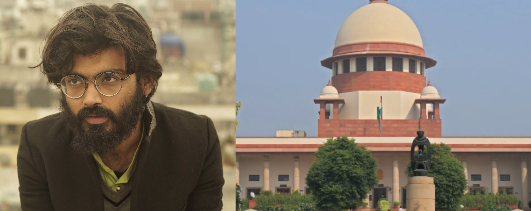
Sharjeel Imam, the former JNU student leader arrested back in January 2020, has now knocked on the doors of the Supreme Court seeking bail in the Delhi riots conspiracy case. His move comes just three days after the Delhi High Court refused to grant him relief, continuing a detention that has stretched for more than five years.
Imam was first picked up on January 28, 2020, weeks before the northeast Delhi violence broke out. His petition, filed through advocate Fauzia Shakil, argues that he has been left languishing in jail not because of his actions, but because of systemic delays in the trial. The plea says that denying bail for over half a decade effectively punishes him as an undertrial, something the law does not allow.
On September 2, a Delhi High Court bench led by Justice Navin Chawla dismissed the bail pleas of Imam and Umar Khalid, calling their roles “prima facie grave.” Along with them, seven others, including Gulfisha Fatima, activist Khalid Saifi, and student leaders like Meeran Haider, were also denied bail.
The court noted that Imam and Khalid were among the earliest voices to mobilise opposition against the Citizenship Amendment Act in December 2019, with speeches, pamphlets, and WhatsApp groups that allegedly pushed the protests into communal lines.
The Delhi Police, represented by Solicitor General Tushar Mehta and prosecutor Amit Prasad, went a step further, labelling Imam and Khalid the “intellectual architects” of the conspiracy. They pointed to Imam’s speeches in Aligarh, Asansol, and Chakand, and Khalid’s February 17, 2020, speech in Amravati, linking it to protests timed with then US President Donald Trump’s India visit.
The activists, however, have maintained that the charges are overstretched. Imam stressed he had been in custody well before the riots, and his words had no direct link with the violence. Khalid, too, argued that his speech was being misinterpreted. Both cited earlier bail orders in favour of Natasha Narwal, Devangana Kalita, and Asif Iqbal Tanha as precedents.
Still, the High Court drew a clear line, saying their roles were “more serious” and that the right to protest cannot cover up planned violence. Imam’s new plea in the Supreme Court now highlights the sheer delay in trial, pointing to multiple charge sheets, endless witness lists, and no clarity on when proceedings might actually conclude.
In August 2020, Sharjeel Imam was charged under FIR 59/2020 with serious offences—rioting (Sec.147, 148 IPC), murder (Sec.302), sedition (Sec.124A), promoting enmity (Sec.153A), alongside UAPA provisions for unlawful activities (Sec.13), terrorist acts (Sec.16), terror funding (Sec.17) and conspiracy (Sec.18).