


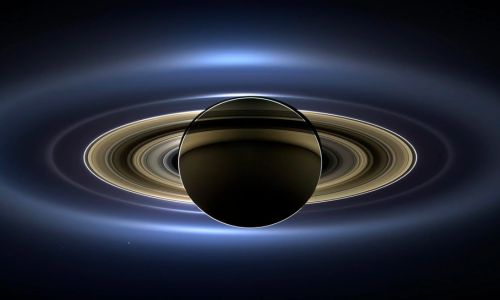
By 2025, Earth will be unable to see Saturn’s elaborate rings because they are progressively losing their brightness. For a very long time, Saturn and its famous rings have fascinated astronomers, astrophotographers, and space enthusiasts.
But there is less time to enjoy their magnificence. By 2025, Earth will be unable to see Saturn’s elaborate rings because they are progressively disappearing. But in 2032, they will once again be visible.
Every fifteen years, the rings—which are usually thirty feet tall and exceedingly wide—become nearly invisible, giving the impression that they have disappeared.
This occurrence is known as the Saturnian equinox. The last time this specific astronomical event was seen was in September 2009. According to European Space Agency predictions, the next equinox will occur on May 6, 2025.
Indeed, these rings will reappear, but not until 2032. Over the course of its 29.5-year orbit, Saturn will gradually tilt, exposing its rings on the other side once more. This display will peak in 2032.
According to NASA Saturn’s rings make up enormous and complex structures.
Water ice particles, which range in size from microns to tens of meters, make up the bulk of the particles in Saturn’s rings.
A remarkable amount of structure can be seen in the rings at all scales; much of this structure is still unknown, but it is thought to be connected to gravitational interactions with Saturn’s numerous moons.


