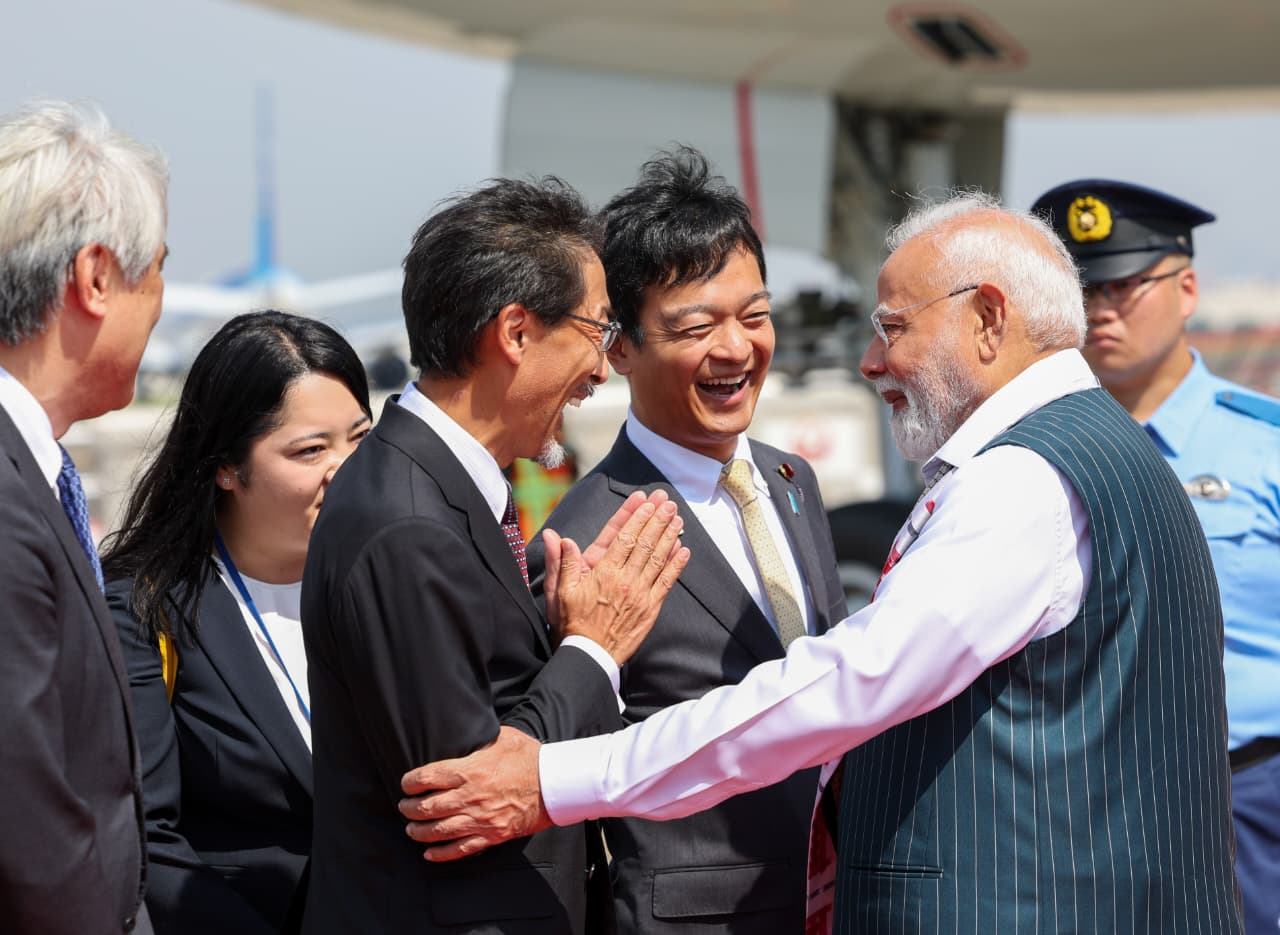
Prime Minister Narendra Modi’s ongoing two-day visit to Japan (August 29-30) signifies the 15th India-Japan Annual Summit in Tokyo with Prime Minister Shigeru Ishiba. This visit marks a significant step in deepening India’s strategic and economic partnerships in Asia. The visit comes amidst global uncertainty marked by rising US tariffs and altered regional alliances. In this context, India and Japan reaffirmed their commitment in the areas of cooperation in technology, defence, and trade, with an estimated $68 billion investment that is potentially on the table.
Prime Minister Modi had been insisting to Japanese Prime Minister Shigeru Ishiba with respect to mutual trust, enhanced democratic values for both countries’ ties, regarding a vision for “free and open Indo-Pacific.” Both leaders emphasized how the technological strength of Japan, combined with India’s skilled manpower, will forge a “favorable combination” for the future.
All these were discussed on a larger horizon, including artificial intelligence, semiconductor production, clean energy, and space in defence collaboration. They will have agreements potentially leading to increased Japanese participation in India’s flagship “Make in India” initiative, especially in high-value sectors such as electronics, electric vehicles, and advanced military equipment.
The Trade and Tariffs War
This backdrop is complemented by the very recent, highly unjustified US measures against imposing heavy tariffs on Asian exports, an act that takes both India and Japan along with it. All of this might have made the Japanese more inclined to strengthen ties with New Delhi. In a joint press conference, both leaders noted that closer India-Japan economic engagement will ensure safety for the chain but also decrease dependency on volatile global markets.
By assuring cooperation and long-term partnership in infrastructure development, renewable energy, and digital innovation, Prime Minister Ishiba was stressing that India occupied a central role in Asia’s growth story in Japan’s eyes. He reaffirmed Japan’s intention to support India’s efforts to attract new-age high-tech industries.
Cooperation in Defence and Security
Defence was also one of the major agenda items that were raised in the course of the visit. India and Japan are expected to expand joint military exercises and improve intelligence sharing to cope with the new emerging security challenges in the Indo-Pacific. In addition, agreements are expected to be reached between the two sides on maritime cooperation as well, especially with regard to ensuring the safety of critical sea lines and maintaining regional stability amid increasing tensions in the South China Sea.
The Eastern Push of Modi
The trip of Prime Minister Modi also falls within the wider “eastern push” in India’s foreign policy, supposed to revitalize relations with important Asian nations. Incidentally, Modi is travelling to China, where he meets Xi Jinping on August 31 during the Summit of the Shanghai Cooperation Organisation (SCO).
This meeting with Xi is expected to focus on bilateral ties, border stability, and trade relations, which have been under strain in recent years. While tensions remain over the Line of Actual Control (LAC), both leaders are expected to explore avenues for easing tensions and boosting cooperation in multilateral forums.
A Balancing Act Between Powers
PM Modi’s visits to Japan, China, and Russia back-to-back would appear to show India’s fine balancing act of survival in today’s setting. With Washington hardening its stance on trade, New Delhi is working to consolidate partnerships in Asia to secure economic and strategic autonomy.
India’s strengthened ties with Japan are more or less like balance counterweight against China, quite obviously, while keeping the lines of communication open with Beijing. Strengthening relations with India thus helps Japan diversify its relationships beyond the traditional strong Western allies.
Looking Ahead
As Prime Minister Modi returns to India from Japan, the outcomes are closely watched in both capitals. The technology transfer agreements, defence cooperation, and investment pledges stand to put a strong force behind India’s growth and a true partner in Asia for Japan.
These days will be crucial not just for India’s external affairs but also in shaping the larger power dynamics of Asia, as Modi faces the current challenge after he meets with Xi Jinping in steering India-China relations toward greater stability while not compromising national security concerns.