Union Minister of Road Transport and Highways, Nitin Gadkari, has recently been at the center of heated discussions around India’s ethanol blending programme. The rollout of E20 petrol, fuel blended with 20% ethanol and 80% petrol, was a step meant to be a major leap in India’s journey towards energy security and sustainable growth. Yet, its launch has sparked sharp reactions from vehicle owners, experts, and political critics alike.
E20 petrol, with 20 percent ethanol blended with petrol, was introduced in India, replacing E5 and E10. Earlier, the government had targeted 2030 for achieving this 20% blend. While this may appear to be a step towards the country’s development, critics have raised concerns over its impact on vehicles. Vehicle owners and automobile experts expressed their worries on social media, calling the new blend harmful for engines, reducing mileage, and causing damage to older vehicles.
Opposition’s reaction
The Congress on Thursday (September 4, 2025) mounted a strong criticism against Union Road Transport and Highways Minister Nitin Gadkari, accusing him of pushing the ethanol blending programme in ways that benefit his family’s business interests.
Party spokesperson Pawan Khera alleged that two firms linked to Gadkari’s sons—Cian Agro Industries, headed by Nikhil Gadkari, and Manas Agro Industries, where Sarang Gadkari is a director—were among the biggest suppliers of ethanol.
He argued that Gadkari’s earlier promise of cheaper fuel had not been fulfilled, noting that petrol and diesel prices had risen sharply over the past decade, while consumers faced more frequent vehicle troubles and higher fuel usage.
Khera also drew attention to what he called an “extraordinary” surge in the fortunes of Cian Agro, which saw its revenue shoot up from just ₹18 crore in mid-2024 to ₹523 crore a year later, alongside a stock market jump of more than 2,000 per cent. He questioned whether the rapid success of these companies was tied to the government’s accelerated ethanol targets, which were achieved ahead of schedule.
The Congress leader asked whether the policy was framed for public benefit or to create a financial windfall for the minister’s family, pressing the government to allow a transparent probe into the matter.
Rejecting the allegations, the BJP countered that the charges were politically motivated. Party spokesperson Sambit Patra said Congress was resorting to tactics similar to those once used by the Aam Aadmi Party, making accusations without producing evidence. He argued that ethanol blending was a step toward cleaner fuel and energy independence, while accusing the opposition of misleading people about its impact on prices and vehicle performance.

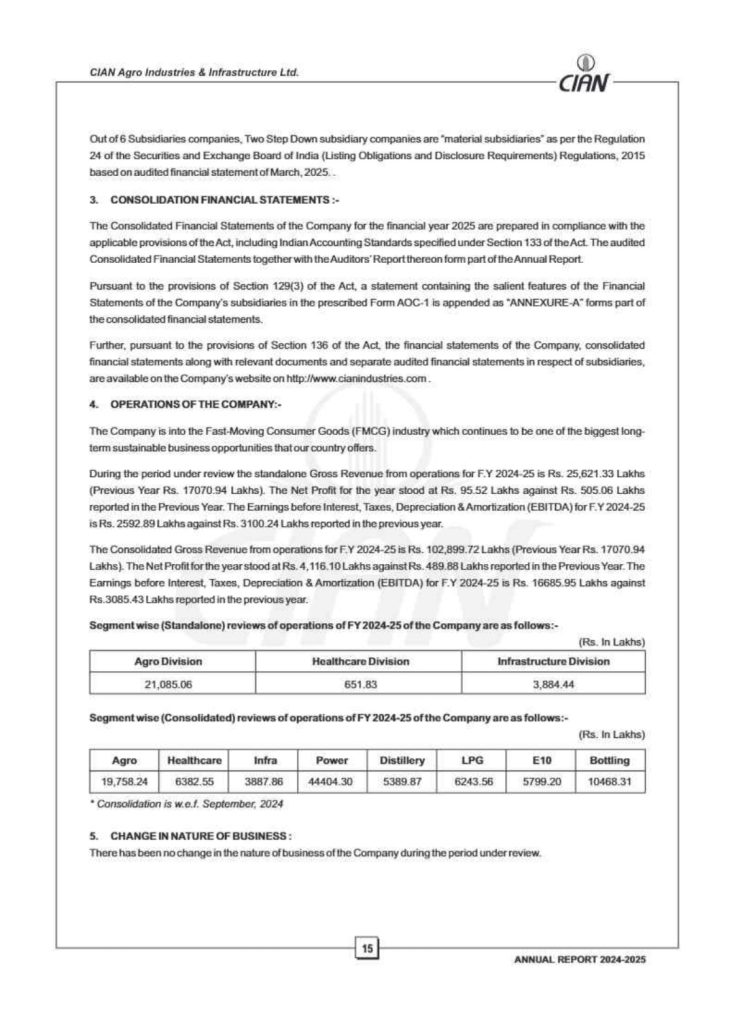


Cian Agro Annual Report: 2024 vs 2025 (Image credits: BSE India)


Director’s Report (Cian Agro Industries 2024–2025) (Image credits: BSE India)
Government of India’s clarification
On August 4, 2025, the Ministry of Petroleum and Natural Gas (MoPNG) responded to these concerns, clarifying that claims of drastic mileage reduction were “misplaced.” The ministry highlighted that, with proper calibration, E20 brings benefits such as better acceleration and reduced emissions. It acknowledged a marginal mileage dip, particularly for older vehicles not originally designed for E20, but emphasized the programme’s positive impact on rural economies and energy security.
As criticism continued, the government, on August 12, 2025, issued another detailed response. It again stressed that worries about drastic mileage reduction were unfounded, pointing instead to benefits like lower carbon emissions, improved performance, and significant economic gains for farmers and the rural economy.
The government noted that such concerns had been anticipated since 2020 and reiterated that no engine failures had been reported since E20’s rollout.
Supporting this, Gadkari on August 6, 2025, said that tests showed older vehicles were not damaged by E20. He blamed the social media outrage on a “political conspiracy,” possibly fueled by petrol lobbies. Similarly, Union Minister for Petroleum and Natural Gas Hardeep Singh Puri, on August 8, compared India’s case with Brazil’s use of E27, noting that Brazil has had no reported engine failures. He emphasized that biofuels are essential for India’s path to self-reliance.
Nitin Gadkari’s recent remarks
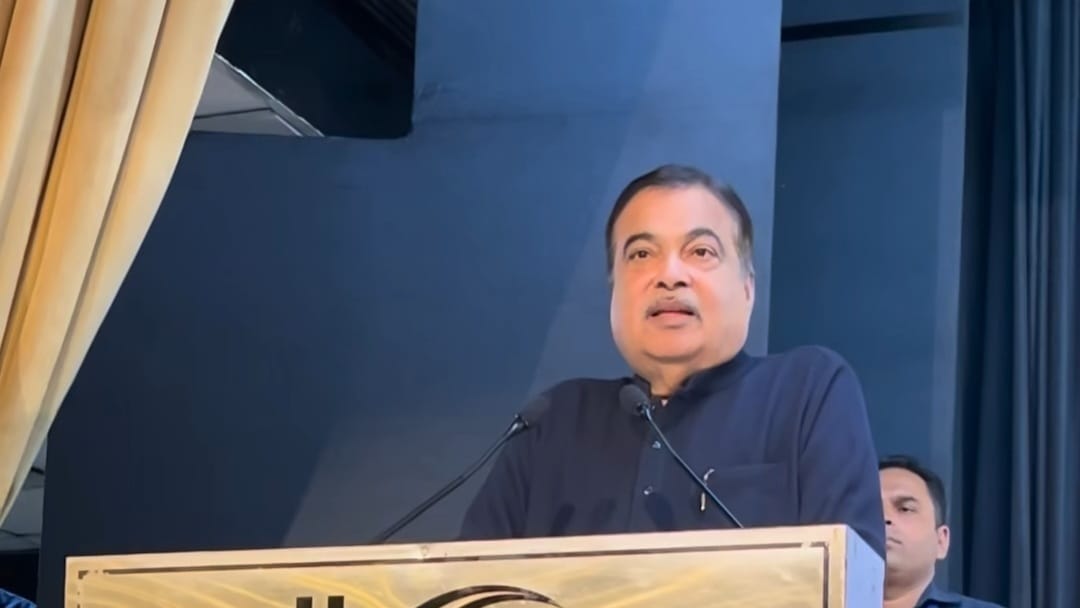
At the 65th annual SIAM (Society of Indian Automobile Manufacturers) Conference, Gadkari hit out at the backlash surrounding E20, claiming that “paid campaigns” were being run against the programme. “The campaign against me was sponsored. Even the Supreme Court has thrown out the petition. There is no factual basis,” he said.
He further highlighted the programme’s economic and environmental benefits, citing the example of corn farmers who collectively earned ₹45,000 crore in profits. The initiative has helped the government reduce fossil fuel imports while also boosting biofuel exports. India currently spends around ₹22 lakh crore annually on fuel imports, and ethanol blending is seen as a step to ease that burden.
Gadkari also linked the ethanol blending programme to tackling air pollution in India, calling it a move towards reducing vehicular emissions while creating a stronger global market for Indian automakers.