


In a rapidly evolving situation in West Asia, India has expressed strong support for a U.S.-brokered ceasefire between Israel and Iran, even as violence threatens to undermine efforts at peace. The Ministry of External Affairs (MEA) welcomed the agreement on Tuesday, while also emphasizing the importance of dialogue, diplomacy, and long-term regional stability.
India Backs Ceasefire, Calls for Dialogue
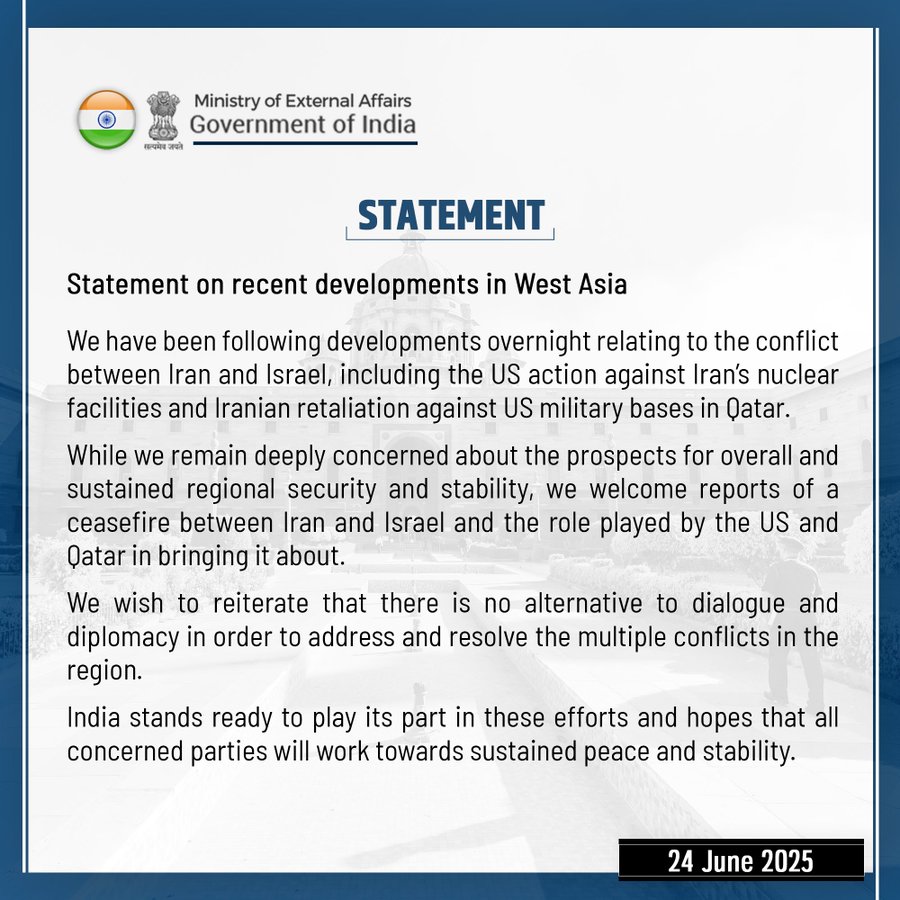
In an official statement, the MEA conveyed India’s support for the ceasefire announced by U.S. President Donald Trump, acknowledging the diplomatic efforts of both the United States and Qatar in mediating between the two adversaries.
“While we remain deeply concerned about the prospects for overall and sustained regional security and stability, we welcome reports of a ceasefire between Iran and Israel and the role played by the U.S. and Qatar in bringing it about,” the statement read.
India reiterated that dialogue remains the only path forward to resolve the deep-rooted conflicts plaguing the region. “There is no alternative to dialogue and diplomacy… India stands ready to play its part in these efforts,” the ministry affirmed.

@MEAIndia
PM Modi Urges Peace in Call with Iranian President
Prior to the ceasefire announcement, Prime Minister Narendra Modi had spoken with Iranian President Masoud Pezeshkian on June 22. The Prime Minister called for “immediate de-escalation” of tensions and underscored the urgent need to protect civilian lives and infrastructure. The conversation reflected New Delhi’s long-standing commitment to maintaining peace and stability in West Asia—a region critical to India’s energy security and home to millions of Indians.
Ceasefire Under Threat as Missiles Continue to Fly
Despite the ceasefire being officially declared, fresh violence has already cast a shadow over its implementation. Within hours of the announcement, Iran launched a missile strike on the Israeli city of Beersheva, resulting in civilian casualties. In response, Israeli forces reportedly retaliated with airstrikes targeting Iranian military installations.
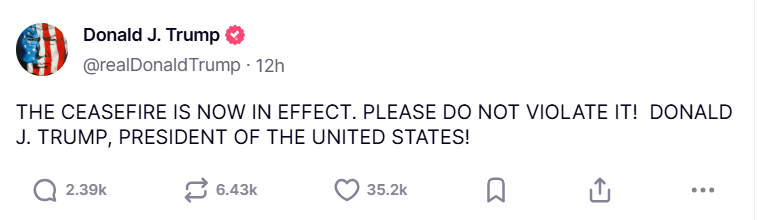
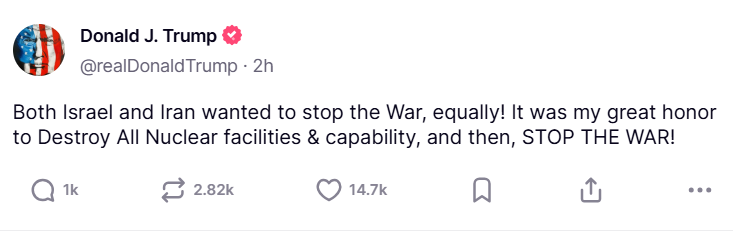
U.S. President Donald Trump confirmed the ceasefire in a post on his social media platform, Truth Social, stating, “The ceasefire is now in effect. Please do not violate it.” However, both sides appear to remain on edge, raising doubts about how long the truce can hold.

@realDonaldTrump

@realDonaldTrump
India’s Swift Evacuation Under ‘Operation Sindhu’
As the conflict flared, India acted swiftly to ensure the safety of its citizens trapped in the crossfire. On Tuesday morning, a special evacuation flight from Iran landed in New Delhi at 3:30 AM IST, carrying 292 Indian nationals from Mashhad. The operation is part of Operation Sindhu, a humanitarian mission initiated by the Indian government on June 18.
“292 Indian nationals were evacuated from Iran on a special flight that arrived in New Delhi from Mashhad at 0330 hrs on 24th June,” MEA spokesperson Randhir Jaiswal posted on X (formerly Twitter).
With this, the total number of Indians evacuated from Iran has reached 2,295. On Monday, another evacuation flight brought back 290 Indians and one Sri Lankan citizen.

@MEAIndia
Evacuations from Israel Also Underway
Simultaneously, evacuation efforts from Israel have been launched. According to the Indian Embassy in Tel Aviv, 604 Indian nationals have been safely evacuated through Jordan and Egypt so far.
On June 23, the first group of 161 Indians evacuated from Israel reached New Delhi via Amman. They were received at the airport by Minister of State for External Affairs Pabitra Margherita.
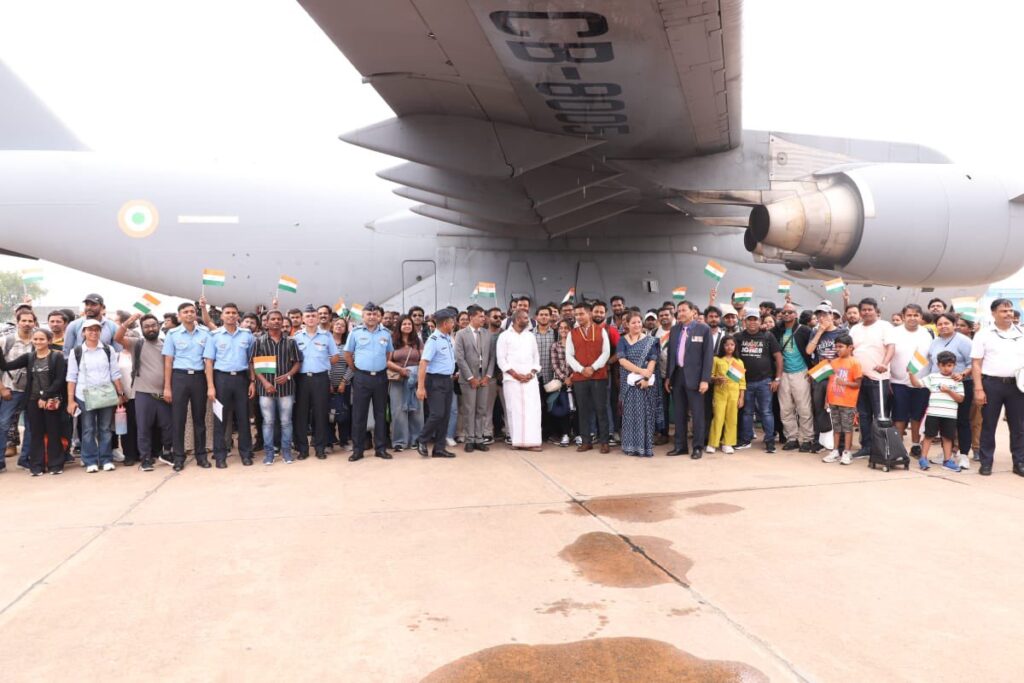
In another development, an Indian Air Force C-17 flight landed in Delhi on Tuesday morning at 8:45 AM IST, carrying 165 more evacuees from Israel. Minister of State Dr. L. Murugan was present at the airport to welcome them.
Background: A Conflict Escalating Rapidly
Tensions between Israel and Iran reached a boiling point on June 13 when Israel launched Operation Rising Lion, targeting Iranian military and nuclear infrastructure. In retaliation, Iran’s elite Islamic Revolutionary Guard Corps (IRGC) initiated Operation True Promise 3, striking Israeli fuel and energy facilities.
The situation took a dire turn when U.S. forces carried out Operation Midnight Hammer—precision airstrikes on three major Iranian nuclear facilities—on June 22. The strikes were aimed at halting Iran’s nuclear ambitions, but further inflamed tensions in the already volatile region.
Despite the ceasefire announcement, the Israeli military reported additional missile attacks from Iran on Tuesday, with emergency services confirming three civilian deaths in affected areas.
India’s Role as a Voice for Peace
As both a close partner of Israel and an important ally of Iran, India finds itself in a unique position. Its calls for restraint and dialogue are not only diplomatic necessities but also reflect a balancing act crucial to safeguarding its strategic interests.
India’s prompt evacuation efforts under Operation Sindhu, combined with its consistent message of peace, underscore New Delhi’s proactive approach in times of global crises. Whether this ceasefire holds or not, India’s role as a responsible global actor and advocate for peace continues to grow.


