

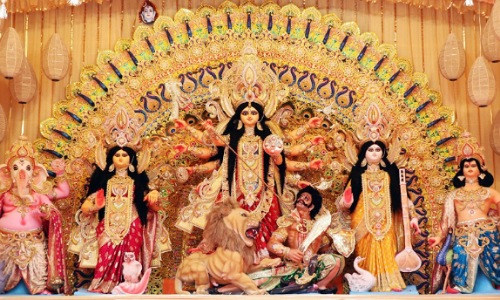
As autumn approaches, the air in West Bengal and Kolkata, and in Bengali communities around the world, becomes infused with an electrifying energy. Durga Pujo, the grandest and most anticipated festival for Bengalis, takes center stage. It’s a celebration that transcends religion and borders, embodying the spirit of unity, creativity, and devotion.
The Arrival of the Goddess:
Durga Pujo, also known as Durga Puja, is a festival that celebrates the arrival of Goddess Durga, a powerful symbol of female strength and divine energy. The legend behind Durga Pujo tells of the Goddess’s visit to her parents’ home on Earth, where she is revered for her triumph over the demon Mahishasura. Her visit is a time of joy, but also of reflection on the eternal struggle between good and evil.
Artistry in Idol Making:
The heart of Durga Pujo lies in the creation of magnificent idols. Talented artisans sculpt exquisite clay images of the Goddess and her four children, Lakshmi, Saraswati, Kartik, and Ganesh. The process begins months in advance, and the unveiling of these artworks during the festival is a moment of awe and reverence.
Elaborate Pandals:
Durga Pujo is equally renowned for its artistic and elaborately designed pandals, temporary structures that house the idols. Each pandal is a work of art in its own right, often representing a unique theme, historical period, or cultural concept. Communities vie to outdo each other, and the result is a breathtaking array of creativity.
Traditional Rituals:
Durga Pujo is a time for both tradition and spirituality. Devotees visit the pandals and participate in various rituals, including aarti (prayer), dhunuchi dance (a traditional dance with incense burners), and the immersion ceremony. The sound of the dhak (traditional drum) reverberates in the air, adding to the festive atmosphere.
Cultural Extravaganza:
Beyond the religious aspect, Durga Pujo is an occasion for cultural expression. It brings together music, dance, drama, literature, and art. Renowned artists and performers take the stage, while literary discussions, art exhibitions, and creative workshops flourish throughout the festival.
Feasts and Festivities:
Food plays a pivotal role during Durga Pujo. Bengali cuisine shines, and it’s a time for feasting on delicious sweets like sandesh and rosogolla, along with savory delights like biryani and various fish preparations. The traditional bhog (prasad) is a highlight for many, symbolizing the sharing of blessings.
A Time of Togetherness:
Durga Pujo transcends religious and regional boundaries. It’s a time when people from all walks of life come together to celebrate, bond, and share joy. The festival encourages unity, tolerance, and respect for diverse cultures, epitomizing the spirit of “unity in diversity.”
The Grand Farewell:
Durga Pujo culminates in a bittersweet farewell. On Dashami, the tenth day, the idols are immersed in rivers or bodies of water, symbolizing the departure of the Goddess and her family. The streets come alive with processions, music, and heartfelt farewells, as people bid adieu to the divine mother.
Conclusion:
Durga Pujo is not just a festival; it’s a cultural extravaganza that embodies the very soul of Bengal and the spirit of a united community. It’s a time to reflect on the power of the divine feminine, the triumph of good over evil, and the creativity of the human spirit. Durga Pujo is a testament to the ability of festivals to unite people, transcend boundaries, and fill our lives with color, love, and inspiration.


